

Our Verdict
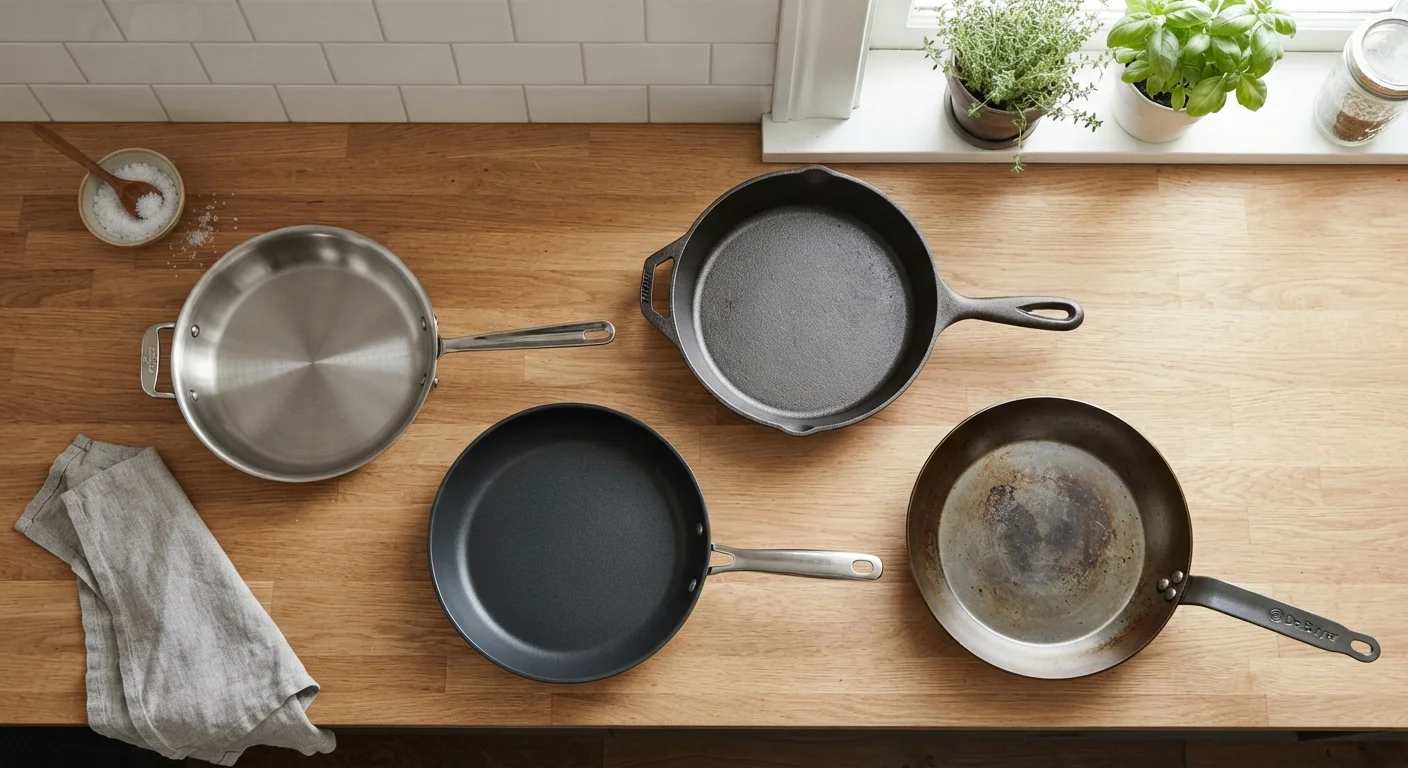
Each cookware material fills a genuinely different role in the kitchen. Nonstick earns its place for eggs and delicate fish; stainless steel handles everything from searing to braising; cast iron shines for prolonged high heat; and carbon steel rewards those willing to season and maintain it. Most home cooks benefit most from pairing one workhorse material with one specialty surface rather than searching for a single do-it-all pan.
| Best for | Recommended |
|---|---|
| Everyday versatility with minimal fuss | Stainless Steel |
| Low-fat cooking of eggs, fish, or crepes | Nonstick |
| Searing, campfire cooking, and oven-to-table presentation | Cast Iron |
| Professional-style sautéing with lighter weight | Carbon Steel |
Why Cookware Material Actually Matters
The pan you choose affects how evenly heat spreads, how quickly it responds to temperature changes, whether food sticks, and how much cleanup is involved. These aren't minor differences - a stainless steel pan and a nonstick pan of the same size behave almost nothing alike on the same burner.
Understanding the underlying physics and trade-offs means you can make a deliberate choice rather than defaulting to whatever fills the shelf at the store. This comparison covers the four materials that dominate home kitchens in the US: stainless steel, cast iron, nonstick (typically PTFE-coated aluminum), and carbon steel.
| Stainless Steel | Cast Iron | Nonstick | Carbon Steel | |
|---|---|---|---|---|
| Heat distribution | Even (multi-ply) | Slow, retains well | Even but moderate | Good, fast response |
| Oven-safe temperature | 500°F+ | 600°F+ | Up to ~500°F | 600°F+ |
| Stick resistance | Technique-dependent | Good when seasoned | Excellent (new) | Good when seasoned |
| Maintenance level | Low | Medium-high | Low | Medium-high |
| Weight | Medium | Heavy | Light | Light-medium |
| Durability | Decades | Lifetime | 3-5 years typical | Lifetime |
| Acidic food safety | Yes | No (strips seasoning) | Yes | No (strips seasoning) |
Stainless Steel: The Workhorse
Stainless steel pans are typically tri-ply or multi-ply - aluminum or copper sandwiched between steel layers - which solves steel's poor thermal conductivity. The result is a pan that heats relatively evenly, tolerates very high temperatures, handles acidic ingredients like tomatoes and wine without reacting, and goes from stovetop to oven without issue.
The trade-off is stickiness. Without proper preheating and adequate fat, proteins will bond to the surface. The fix is technique: heat the dry pan until a drop of water skitters across it, then add oil. Once the protein releases naturally, it will lift cleanly. This learning curve discourages some beginners, but the payoff is a pan that develops fond - the browned bits that form the base of pan sauces - better than any coated surface.
Getting the Most from Stainless Steel
Preheat your stainless steel pan over medium heat for 2 to 3 minutes before adding oil. A small drop of water should bead and skitter - not evaporate immediately. Add your fat, let it shimmer, then add food. Resist moving proteins right away; when they're ready to release, they will lift on their own.
Cast Iron: Heat Retention Champion
Cast iron heats slowly and unevenly compared to stainless, but once it reaches temperature it holds heat with unusual stability - making it ideal for searing thick cuts, baking cornbread, or frying at consistent temperatures. Its mass also makes it suitable for direct fire, campfire grills, and long oven sessions.
Maintenance is real: cast iron must be dried thoroughly after washing, lightly oiled before storage, and re-seasoned periodically when the surface looks dull or patchy. Acidic foods cooked for extended periods can strip seasoning. Weight is the other limiting factor - a 12-inch cast iron skillet commonly runs 5 to 8 pounds, which can be cumbersome for tasks like tossing vegetables.
Nonstick: Convenience with Caveats
Modern nonstick cookware is typically aluminum with a PTFE (polytetrafluoroethylene) coating, though ceramic-coated variants also exist. The slick surface excels at tasks where sticking is the primary problem: fried eggs, crepes, delicate fish fillets, and low-fat cooking. Cleanup is minimal.
The key limitations are durability and temperature. PTFE coatings degrade with metal utensils, abrasive cleaning, and sustained high heat. Most manufacturers recommend avoiding temperatures above 500°F, which rules out hard searing. Scratched coatings should be retired - while current research suggests the health risk from damaged PTFE is low, a damaged surface loses its functional benefit anyway. Expect to replace nonstick pans more frequently than other types.
Don't Use Metal Utensils on Nonstick
Metal spatulas, whisks, or tongs can scratch PTFE coatings quickly, shortening the pan's usable life. Stick to wood, silicone, or nylon utensils. Once a nonstick surface is visibly scratched or flaking, the coating no longer performs its intended function and the pan should be replaced.
Carbon Steel: The Lighter Alternative
Carbon steel shares cast iron's seasoning requirement and reactivity with acidic foods, but it's substantially thinner and lighter - a 12-inch carbon steel pan typically weighs 3 to 4 pounds. It also heats and cools faster, giving the cook more immediate control over temperature.
The material is the standard in professional French kitchens for sautéing, and it handles tasks ranging from searing to crepes. The seasoning process takes more initial effort than cast iron - new carbon steel often has a factory coating that must be removed before the first seasoning - but once established, a well-seasoned carbon steel surface approaches nonstick performance for many tasks.
If you're already thinking about how cooking methods interact with equipment, it's worth reading how air fryers and convection ovens compare - the same principle applies: the cooking vessel shapes the outcome as much as the heat source does.
The content on this site is for informational purposes only and is not a substitute for professional advice. Always consult a qualified professional for guidance specific to your situation.