

Our Verdict
Loyalty programs can deliver real value for shoppers who spend consistently within a single retailer or category - but they're designed to benefit the business first. The data-sharing, spending pressure, and often opaque reward structures mean casual participants frequently give more than they get. Approaching any program with clear-eyed math rather than emotional attachment is the most reliable way to come out ahead.
Consumers who already shop regularly at a specific retailer and can redeem rewards without changing their natural spending habits.
What Loyalty Programs Actually Are
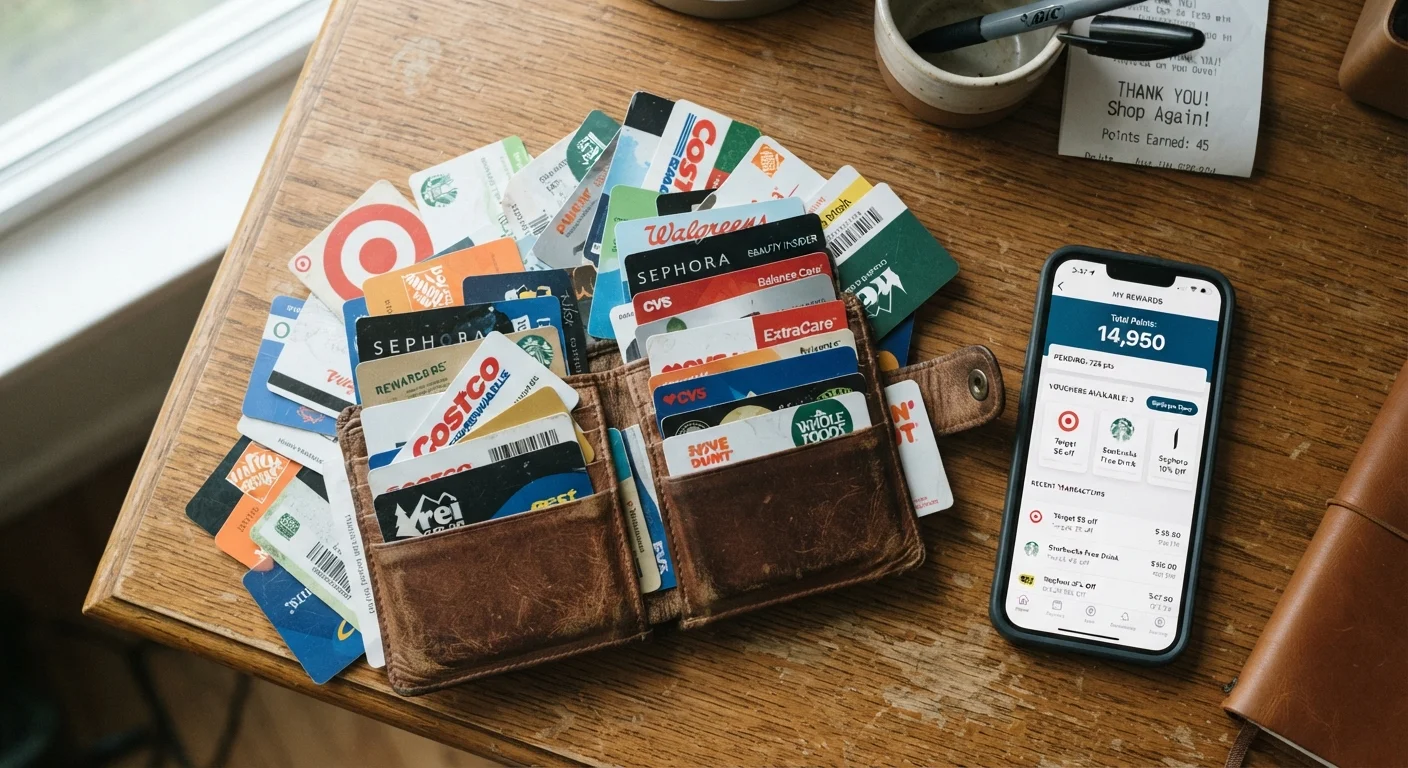
Loyalty programs go by many names - rewards clubs, points systems, member pricing, VIP tiers - but the underlying structure is consistent: you share data and concentrate your spending with one business in exchange for future benefits. Retailers, airlines, hotels, and even grocery chains have built entire customer retention strategies around them.
The premise sounds straightforward: spend money, earn points, redeem for discounts or perks. In practice, each step involves conditions that aren't always spelled out clearly at sign-up. Understanding how these programs are structured is the starting point for evaluating whether they're actually working in your favor. For a broader look at how pricing psychology shapes purchase decisions, see how cognitive biases affect shoppers.
The Real Advantages
Loyalty programs aren't purely a trap - for the right consumer, they generate meaningful value.
Tangible rewards on routine spending
For frequent shoppers in a single category, points accumulate on purchases they would make regardless, effectively reducing net cost over time.
Early access and member-exclusive events
Some programs offer genuine early access to sales or limited inventory, which can matter in categories like electronics or footwear where popular items sell out quickly.
Consolidated purchase history for budgeting
Member accounts often provide a detailed spending record that can help consumers track category spend without relying on manual logging.
Tiered perks reward heavy, loyal spend
Higher tiers in well-structured programs - particularly in travel and hospitality - can unlock meaningful benefits like complimentary upgrades or fee waivers for consumers who would reach those spend levels anyway.
The clearest wins come when your natural spending patterns align with a program's reward structure. If you routinely buy groceries, fuel, or household goods at the same retailer, a well-designed program essentially offers a discount on spending you were going to do anyway. The math only works, however, when you track what you earn against what you spend - rather than relying on the retailer's dashboard to tell that story for you.
The Hidden Costs and Trade-Offs
Every loyalty program involves a set of concessions that are easy to overlook during sign-up.
Points devalue or expire without warning
Program operators can and do reduce the redemption value of accumulated points, sometimes with minimal notice. Banked points represent a liability for the company, creating an incentive to reduce that liability over time.
Member pricing often inflates the baseline
Retailers sometimes raise standard prices to make member prices appear more attractive - a form of anchor pricing that the Federal Trade Commission has flagged in broader contexts around deceptive pricing.
Data sharing is extensive and often underestimated
Loyalty programs are, at their core, data collection systems. Retailers use purchase history, frequency, and timing data to personalize pricing and promotions - sometimes in ways that disadvantage the very members being rewarded.
Spending behavior shifts toward the enrolled retailer
Research in behavioral economics indicates that earning toward a threshold increases spending, even when cheaper alternatives exist elsewhere. The opportunity cost is real but invisible on a points balance statement.
High redemption thresholds delay actual value
Many programs set minimum redemption levels high enough that casual participants accumulate points for months or years without ever reaching a usable reward.
The most significant hidden cost is behavioral: programs are engineered to increase purchase frequency and average order value. Research in consumer psychology consistently shows that people spend more when they're chasing a reward threshold - a dynamic that can easily erase whatever points value they accumulate. This overlaps with how retailers use discount framing more broadly, which is explored in our piece on hidden costs that inflate apparent deals.
Member Pricing Isn't Always a Baseline Discount
Some retailers structure their pricing so that the "regular" price is rarely, if ever, charged - making the member price the de facto standard price. Before assuming membership saves you money, compare the member price against prices at competing retailers for the same or equivalent items. Price-comparison tools and browser extensions can make this check faster, though they don't catch every variation in product specifications.
How to Evaluate a Program Before You Join
Not all loyalty programs are equally skewed toward the retailer. A few practical questions can clarify whether a specific program is worth your participation:
- What is the effective return rate? Divide the dollar value of rewards by the spending required to earn them. Many programs deliver 1-2 cents per dollar spent; some deliver less.
- Do points expire? If redemption requires consistent activity you wouldn't otherwise maintain, the rewards may never materialize.
- What data are you sharing? Review the privacy policy - purchase history, location, and browsing behavior are commonly collected and sometimes shared with third parties.
- Are member prices genuinely lower? Cross-check "member" pricing against non-member prices at competing retailers before assuming you're getting a deal.
Programs tied to credit cards add another layer of complexity. Rewards credit cards can compound benefits - or compound debt, depending on your payment habits. That intersection of loyalty perks and credit behavior is worth understanding separately; the Credit & Debt hub covers the mechanics in detail.
For comparison shoppers who rely on promotions, it's also worth understanding how loyalty discounts stack up against other mechanisms - see coupon codes vs. automatic discounts for a structural comparison.
~$360B
Estimated value of unredeemed loyalty points globally
Industry analysts have estimated that hundreds of billions of dollars in loyalty points go unredeemed annually, representing value consumers earned but never collected.
~57%
Share of loyalty members who rarely or never redeem
Multiple consumer surveys have found that a majority of loyalty program members either redeem infrequently or not at all, according to research published by loyalty industry analysts.
The content on this site is for informational purposes only and is not a substitute for professional advice. Always consult a qualified professional for guidance specific to your situation.