

Why Renting Doesn't Mean Settling
Roughly one in three US households rents, yet the assumption persists that renters must endure bland beige walls and builder-grade fixtures until they own. That's simply not true. The gap between a forgettable rental and a space you genuinely enjoy living in comes down to knowing which changes are reversible - and which will cost you your deposit.
The strategies below focus on impact over permanence. They work whether you're in a studio apartment or a three-bedroom house, and most require no special skills. For inspiration on making compact spaces feel larger, see our guide on decorating a small apartment. Before starting any project, pull out your lease and read the modification clause carefully - what one landlord permits, another may not.
What you will need
How to Personalize Your Rental: Step by Step
Work through these steps in order. Each builds on the last, so you avoid redundant purchases and end up with a cohesive result rather than a cluttered one.
Read your lease and document everything
Before buying a single item, photograph every wall, floor, and fixture. Capture existing scuffs, nail holes, and stains. Store these photos with a date stamp in cloud storage. Then re-read your lease's alteration clause - look for language about painting, hanging items, or installing fixtures. If anything is ambiguous, email your landlord to confirm in writing what's permitted. Written permission protects both parties.
Anchor the room with a large area rug
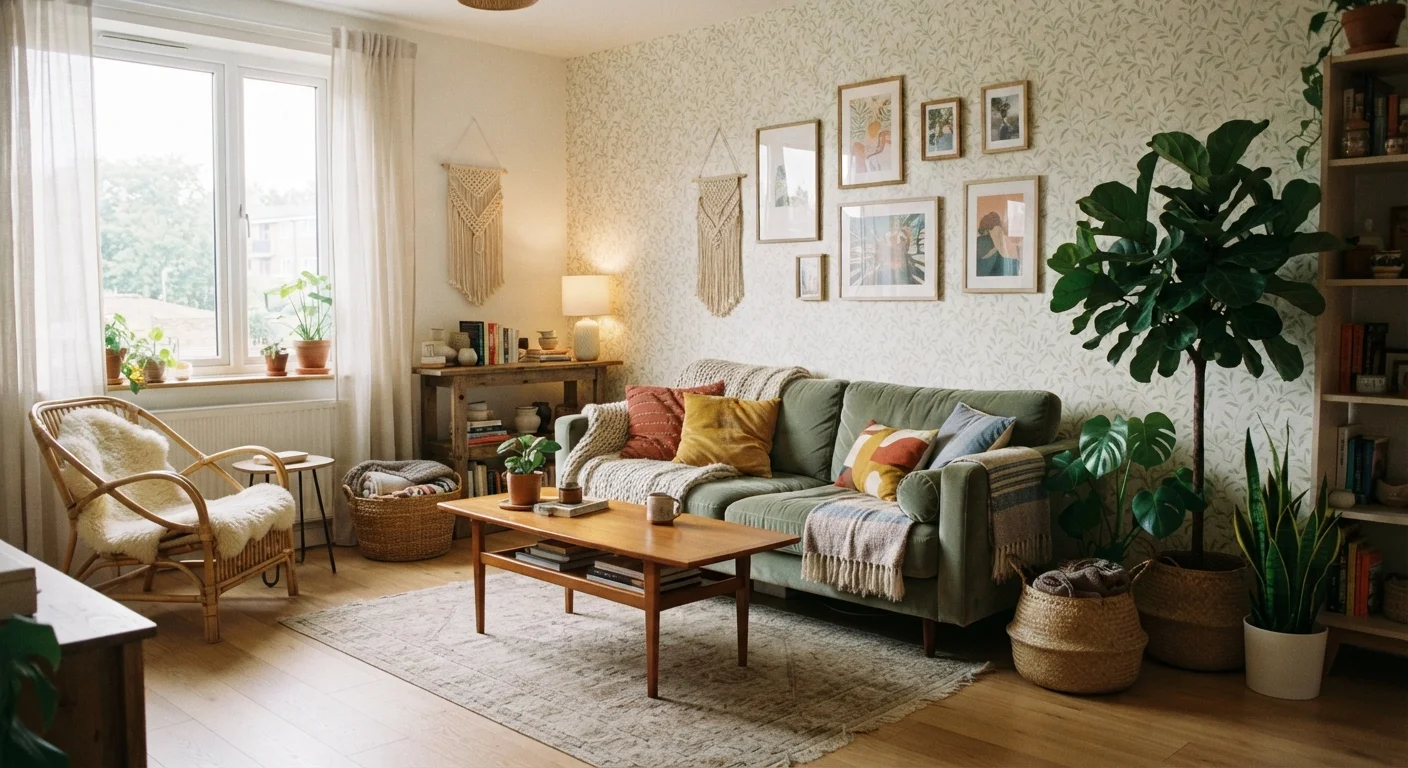
Rental flooring is rarely inspiring. A large area rug - one that fits comfortably under the front legs of all your main seating - defines the room's boundaries, adds warmth underfoot, and introduces your color palette. Choose a rug large enough that the space doesn't look like furniture floating on an island. Layering a smaller textured rug on top of a flat-weave base adds depth without extra cost.
Upgrade lighting without touching wiring
Overhead lighting in rentals tends to be harsh and unflattering. You cannot rewire the unit, but you can supplement. Add floor lamps, table lamps, and plug-in sconces to create layered light at multiple heights. Smart bulbs that screw into existing fixtures let you control warmth and dimming without any modification. When you move out, take your lamps and reinstall the original bulbs.
Hang art and mirrors using removable adhesives
Nail holes are one of the most common deposit deductions. Removable adhesive strips rated for the weight of your artwork allow you to hang gallery walls, mirrors, and shelving without permanent damage. Follow the weight limits on the packaging precisely - overloading an adhesive strip is the main reason they fail. For heavier mirrors or shelves, look for adhesive hooks rated for that specific load, or ask your landlord for permission to use a single anchor bolt.
Use removable wallpaper or peel-and-stick tiles for focal points
Removable wallpaper has matured significantly and is now widely available in convincing textures and patterns. A single accent wall behind a bed or sofa creates a visual anchor point that transforms a room. Peel-and-stick tile panels can refresh a tired kitchen backsplash or bathroom surround. Apply to clean, dry surfaces and follow the manufacturer's removal instructions when you move out. Test a small section first to confirm the adhesive doesn't pull paint.
Layer window treatments over existing blinds
Most rentals include functional but uninspiring window blinds. Rather than replacing them, add curtain panels using a tension rod or a curtain rod with adhesive-mounted brackets. Floor-length curtains hung close to the ceiling make rooms feel taller. Sheer panels soften light during the day; heavier fabric adds privacy and warmth at night. This stacks visual interest without touching the landlord's existing hardware. For ideas on using curtains and other elements to divide open spaces, see our article on dividing open-plan spaces without permanent walls.
Modifications That Can Cost Your Deposit
Painting walls, removing cabinet doors, replacing hardware, and installing permanent shelving anchors are all common rental decorating moves that frequently result in deposit deductions or repair charges. Even 'minor' changes may violate your lease if done without written landlord approval. When in doubt, ask first - a quick email is far less costly than a repair bill at move-out.
Finishing Touches and Long-Term Upkeep
Once your core layers are in place, small additions do outsized work. A few large-leafed plants add organic color and texture that no furniture can replicate. Scent - a candle, a diffuser, a bowl of dried citrus - signals home in a way that's invisible to a camera but immediate to anyone walking through the door.
As you refine your look over time, keep a simple inventory of every item you've added and every adhesive hook you've installed. That list becomes your move-out checklist. For a deeper dive into the principles behind confident color decisions, read our color theory guide for living spaces. And if you're ever unsure whether a repair falls to you or your landlord, this guide on renter maintenance responsibilities breaks down the typical split clearly.
Move-Out Planning Starts at Move-In
Keep a box or bag containing every original fixture, switch plate, and hardware piece you swap out. Label each item with its location. When your tenancy ends, reinstallation takes minutes rather than a frantic search through storage. This simple habit is one of the most effective ways to protect your full deposit return.
The content on this site is for informational purposes only and is not a substitute for professional advice. Always consult a qualified professional for guidance specific to your situation.