

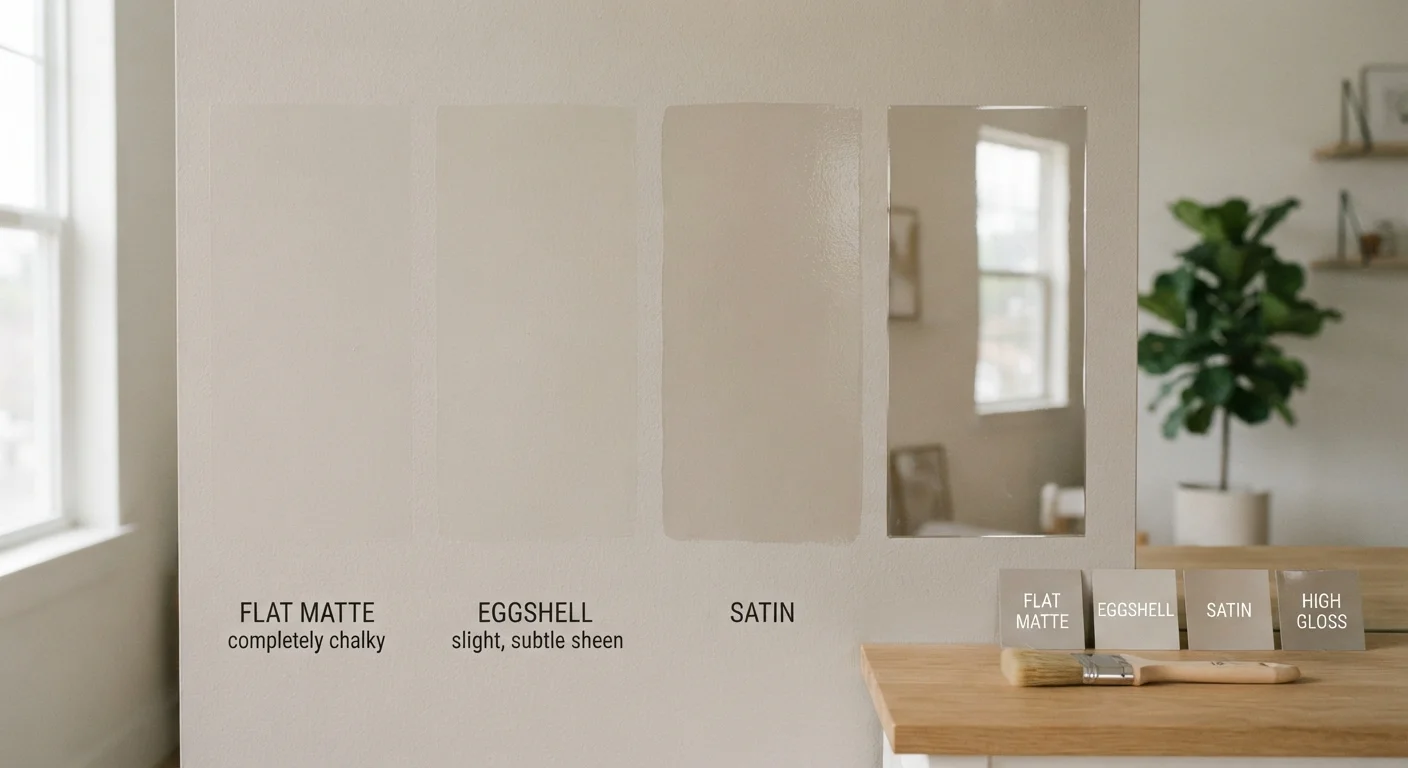
Why Paint Finish Is More Than an Afterthought
Most homeowners spend hours deliberating over color and then pick a finish almost at random. That's a costly shortcut. Finish - also called sheen level - controls how much light a painted surface reflects, how durable it is under everyday wear, and how forgiving it is when walls aren't perfectly smooth. Get the finish right and the color rewards you. Get it wrong and even a beautiful hue can look flat, streaky, or out of place.
The core finishes you'll encounter, from least to most reflective, are: flat/matte, eggshell, satin, semi-gloss, and high-gloss. Each has a specific job. Pairing the finish to the surface and the room's demands is a practical decision, not just an aesthetic one.
For a deeper look at how color interacts with sheen, see our practical introduction to color theory - understanding saturation and contrast will make finish choices even clearer.
| Finish types (low to high sheen) | Flat → Eggshell → Satin → Semi-gloss → High-gloss |
| Most versatile interior finish | Eggshell |
| Standard finish for trim and doors | Semi-gloss |
| Ceiling finish recommendation | Flat/matte only |
| Best finish for kids' rooms | Satin (easier to clean) |
| Finish that best hides wall imperfections | Flat/matte |
The Five Finish Types, Explained
Flat / Matte
Flat paint reflects almost no light, which makes it excellent at hiding surface imperfections like nail holes, uneven texture, and patched drywall. The trade-off is that it scuffs easily and is difficult to wipe clean without dulling the surface. Best for: adult bedrooms, formal dining rooms, low-traffic ceilings, and any wall where disguising texture matters more than durability.
Eggshell
Eggshell has a subtle, low-luster sheen - think the surface of an actual eggshell. It holds up to light cleaning and resists mild moisture better than flat paint. This is one of the most versatile finishes in residential painting. Best for: living rooms, hallways, and adult bedrooms where you want a touch more durability without a shiny wall.
Satin
Satin sits in the middle of the sheen spectrum and strikes a strong balance between appearance and practicality. It's noticeably smoother-looking than eggshell, wipes down without much fuss, and handles humidity reasonably well. Best for: kitchens, kids' rooms, laundry rooms, and light-use bathrooms. It also works well on trim when you want a slightly softer look than semi-gloss.
Semi-Gloss
Semi-gloss has a clearly reflective surface that cleans up easily and resists moisture effectively. It does amplify wall imperfections, so surface preparation matters more here. Best for: bathroom walls, kitchen backsplash areas, door and window trim, baseboards, and cabinetry. This is the standard choice for most interior woodwork in the US.
High-Gloss
High-gloss is the most reflective and the most durable finish. It's also the most demanding - any dent, brush mark, or uneven surface will be visible. It requires thorough sanding and priming to look right. Best for: exterior doors, furniture accents, cabinets intended to make a design statement, and surfaces that take heavy daily contact.
Sheen
The degree to which a dried paint surface reflects light. Higher sheen means more reflectivity, greater durability, and less ability to hide surface imperfections.
Flat / Matte finish
A non-reflective paint finish that absorbs light rather than reflecting it. It conceals surface flaws well but is more susceptible to scuffing and staining.
Eggshell finish
A low-luster finish with a very slight sheen, roughly resembling the surface of an eggshell. It offers a modest improvement in durability and cleanability over flat paint.
Satin finish
A mid-range finish with a soft, smooth appearance. It handles light cleaning and moderate humidity well, making it suitable for kitchens, bathrooms, and active living spaces.
Semi-gloss finish
A noticeably reflective finish that is durable and moisture-resistant. Commonly used on trim, doors, and cabinetry throughout US homes.
High-gloss finish
The most reflective paint finish available. It offers maximum durability and a bold, polished appearance, but requires excellent surface preparation to look smooth.
Matching Finish to Room: A Practical Summary
Here's a consolidated way to think about room-by-room decisions:
- Ceilings: Flat only. Sheen on a ceiling catches light irregularly and makes texture stand out.
- Living and dining rooms: Eggshell or matte, depending on traffic level.
- Bedrooms: Flat or eggshell for adults; satin for children's rooms.
- Kitchens and bathrooms: Satin on walls; semi-gloss on trim, cabinets, and tile-adjacent surfaces.
- Trim, doors, and baseboards throughout: Semi-gloss is the reliable default.
- High-contact accent surfaces: High-gloss where maximum durability or a bold visual statement is the goal.
One often-overlooked rule: the same color can look noticeably different at different sheen levels. If you're sampling colors, sample them in the intended finish. A warm taupe in matte reads quite differently from the same taupe in satin.
Also worth knowing: if you're planning a significant repaint and the existing paint is peeling, the finish choice won't save you. Our article on why fresh paint peels covers the prep mistakes that cause finish failures before they start. And once you've nailed down sheen, pairing your wall finish decisions with the right window treatments can further shape how light reads in each room.
Sampling Colors? Match the Finish First
Paint sample chips are typically printed in a single standardized sheen. When you test a color on your actual wall, apply it in the finish you intend to use - not just any leftover paint. The same pigment in flat versus semi-gloss can appear meaningfully different in natural and artificial light. This step costs little time and prevents expensive surprises after the full job is done.
The content on this site is for informational purposes only and is not a substitute for professional advice. Always consult a qualified professional for guidance specific to your situation.