

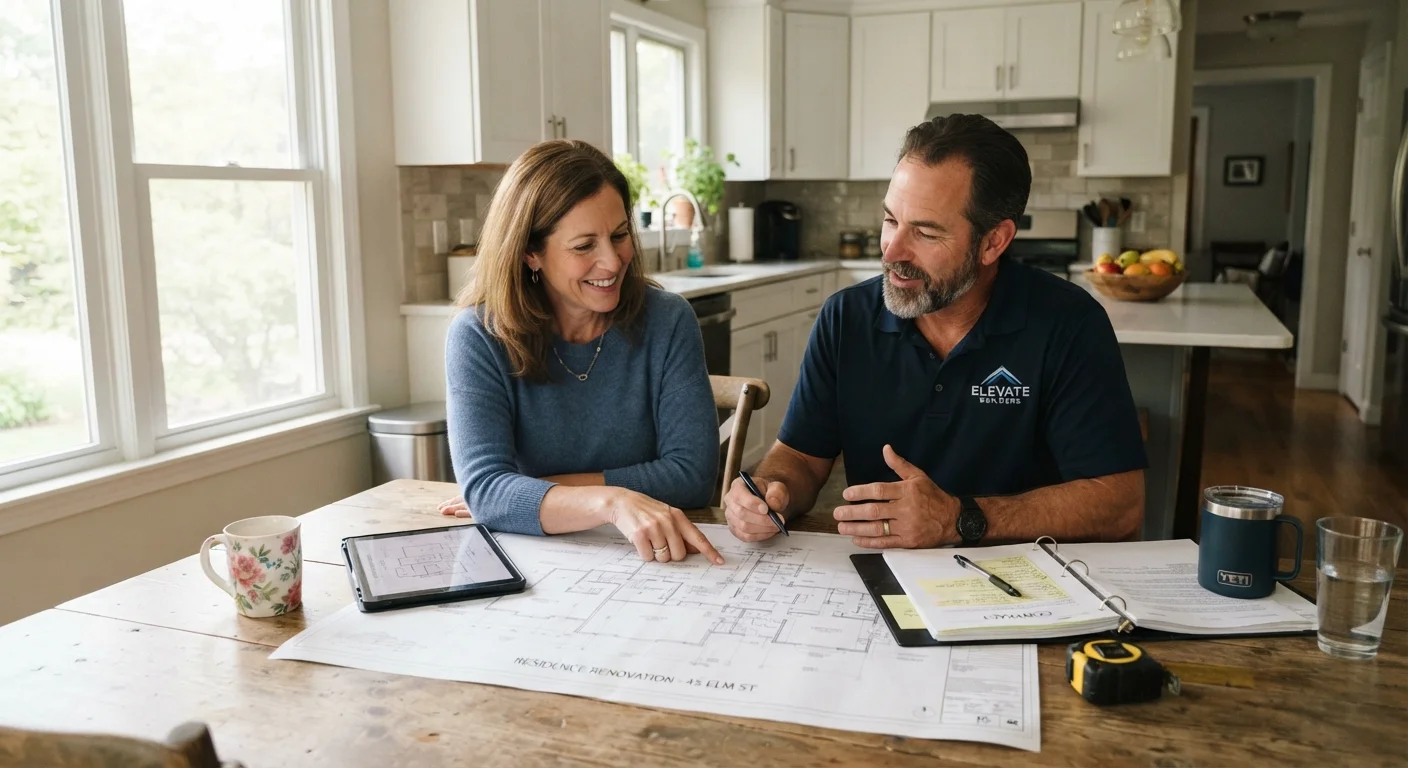
Why the Contract Conversation Starts Before You Sign
A home improvement contract is only as protective as the clarity behind it. Many homeowners sign contracts they haven't fully read - or ask no questions at all - and only discover the gaps when something goes wrong. The good news: most reputable contractors expect and welcome informed questions. Asking them signals that you're an engaged client, which often improves the working relationship from the start.
Before you get to the signature line, it's worth understanding what the contract should cover and what questions to raise if it doesn't. If you haven't yet verified the contractor's credentials, our contractor verification checklist is a useful starting point. And if you're still deciding whether to hire out or handle a project yourself, see DIY vs. calling a professional for guidance on making that call.
Get At Least Three Written Bids
Before signing anything, collect written bids from at least three contractors for the same scope of work. Comparing bids helps you spot outliers - both unusually low bids that may signal corners being cut and unusually high ones. A written bid also gives you a baseline for evaluating what's actually included in each contract.
Key Questions to Ask
Are you licensed and insured for this type of work?
Licensing requirements vary by state and trade, but in most jurisdictions, contractors performing structural, electrical, plumbing, or HVAC work must hold an active license. Ask to see the license number and verify it with your state's contractor licensing board. Equally important: confirm the contractor carries both general liability insurance and workers' compensation coverage. If a worker is injured on your property and the contractor lacks workers' comp, you could face financial liability. Request certificates of insurance directly from the insurer - not just a copy handed to you by the contractor.
Verify the license number directly with your state's licensing board - don't rely on the contractor's word alone.
Who will actually perform the work?
Many contractors subcontract portions of a project - sometimes the majority of it. Ask upfront which tasks will be handled by the contractor's own crew and which will be outsourced. If subcontractors are involved, confirm that they are also properly licensed and insured. You have every right to know who will be in your home. This question also reveals whether the contractor has a reliable network or is assembling a team on the fly, which can affect both quality and scheduling.
Subcontractors must carry their own insurance - the prime contractor's policy may not cover them.
What does the payment schedule look like?
A legitimate contractor will rarely ask for full payment upfront. A typical structure involves a reasonable deposit (often 10-30% depending on project size and local norms), progress payments tied to completed milestones, and a final payment upon satisfactory completion. Be cautious of any contractor who demands more than half the total cost before work begins. Make sure the payment schedule is written into the contract, not just discussed verbally, and that each payment is linked to specific, verifiable stages of work.
Tie every payment installment to a completed, inspectable milestone - never to a calendar date alone.
Who is responsible for pulling permits?
Many home improvement projects - additions, structural changes, electrical upgrades, new roofing, and more - require permits from your local building department. Pulling permits is typically the contractor's responsibility, but confirm this explicitly in writing. A contractor who suggests skipping permits to save time or money is a serious red flag. Unpermitted work can create problems when you sell your home, void your homeowner's insurance, or require costly demolition and rework to bring the project up to code. See our guide to when permits are required for a fuller breakdown.
Never allow a contractor to skip required permits - the liability ultimately falls on you as the homeowner.
How will change orders be handled?
Scope changes are common in home improvement projects, especially once walls open up and hidden conditions are revealed. Ask the contractor to explain their change order process before work begins. Every change - whether it adds cost, removes work, or shifts the timeline - should be documented in a written change order signed by both parties before the work is performed. Verbal agreements about scope changes are a leading cause of contractor disputes. Make sure the contract explicitly states that no additional work will be performed without a signed change order.
Every scope change, no matter how minor, deserves a signed written change order before work proceeds.
What warranty do you offer on labor and materials?
Warranties on contractor work fall into two categories: the manufacturer's warranty on materials (such as roofing shingles or windows) and the contractor's own warranty on the quality of their labor. Ask specifically what the contractor guarantees on their workmanship, for how long, and what the process is if something fails. Get all warranty terms in writing as part of the contract. Our overview of warranties and what to confirm before committing can help you understand what strong coverage looks like.
A contractor's labor warranty and a manufacturer's materials warranty are separate - confirm both in writing.
What is the project timeline and daily work schedule?
Ask for a realistic start date, an estimated completion date, and a sense of how many days per week workers will be on site. Delays are common in construction, but understanding the expected rhythm helps you plan around the disruption. Confirm what happens if the project runs significantly over schedule - some contracts include a completion date with provisions for delays caused by weather or material shortages, which is reasonable, but open-ended timelines with no accountability are not. A clear timeline also makes it easier to monitor progress against the payment schedule.
An estimated completion date with documented delay provisions gives you a basis for holding the contractor accountable.
When to Involve a Professional Reviewer
For large or complex projects - major additions, full kitchen or bathroom gut renovations, or any work exceeding $20,000 - consider having a construction attorney review the contract before you sign. Some homeowners also hire an independent project manager or owner's representative to oversee the work on their behalf. These are reasonable investments when the stakes are high and the contract language is dense.
Putting It All Together
A well-written contract protects both you and the contractor by leaving as little as possible to interpretation. Once you've asked these questions and received satisfactory answers, make sure every commitment - scope, timeline, payment schedule, permits, warranties, change order process - is captured in the written document before anyone picks up a tool.
If your contractor resists putting specific terms in writing, or dismisses your questions as unnecessary, treat that as meaningful information about how disputes will be handled once work is underway. A signed contract built on clear, mutual understanding is the foundation of a successful project - and the best protection you have if things don't go as planned.
The content on this site is for informational purposes only and is not a substitute for professional advice. Always consult a qualified professional for guidance specific to your situation.