

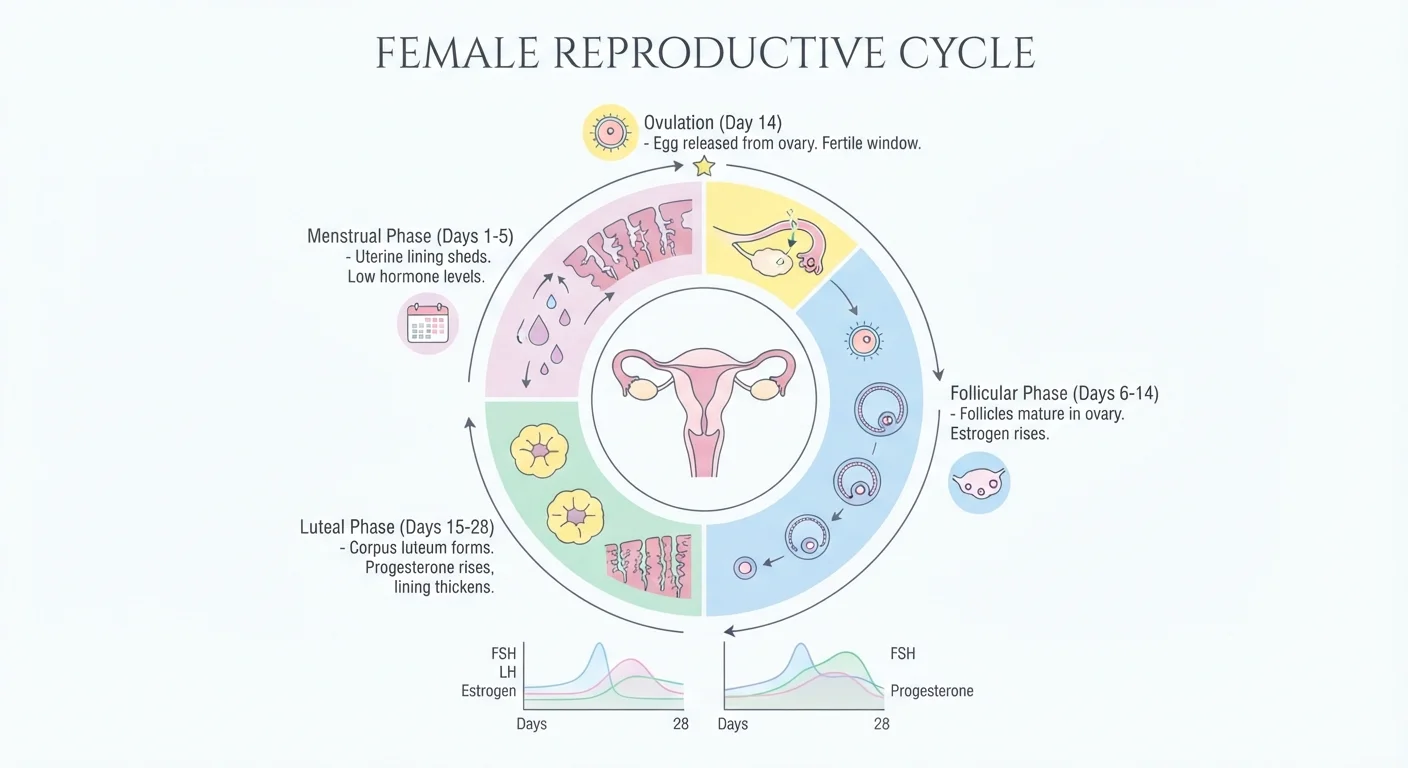
Phase 1: Menstruation
The cycle begins with menstruation - the shedding of the uterine lining built up during the previous cycle. This phase typically lasts two to seven days. During this time, levels of estrogen and progesterone are at their lowest, which is why many people experience fatigue, cramping, and lower energy.
Menstrual flow consists of blood, mucus, and uterine tissue. Light spotting to moderate flow is considered typical. Flow that is unusually heavy - soaking through a pad or tampon hourly for several consecutive hours - is worth discussing with a healthcare provider.
Track More Than Just Your Period Date
Recording symptoms like energy levels, mood, sleep quality, and physical changes throughout the entire cycle - not just the bleeding days - gives a much richer picture of your hormonal patterns. Many free cycle-tracking apps allow you to log these details. Share several months of data with your healthcare provider if you have concerns about irregularity or symptoms.
Phase 2: The Follicular Phase
The follicular phase overlaps with menstruation and continues after bleeding stops, typically lasting from days 1 through 13. The pituitary gland releases follicle-stimulating hormone (FSH), prompting several follicles in the ovaries to develop. Usually, one dominant follicle matures and produces increasing amounts of estrogen.
Rising estrogen levels cause the uterine lining to thicken again in preparation for a potential pregnancy. Many people notice increased energy, improved mood, and sharper mental clarity during this phase - a direct effect of rising estrogen on the brain.
21-35 days
Normal menstrual cycle length range
According to the American College of Obstetricians and Gynecologists, this range encompasses most healthy cycles.
12-24 hours
Window an egg remains viable after ovulation
This narrow window underscores the importance of understanding cycle timing for both fertility planning and avoidance.
Up to 90%
Of menstruating people report at least one PMS symptom
Research published in gynecological literature consistently finds that most menstruating people experience some premenstrual symptoms, though severity varies widely.
Phase 3: Ovulation
Ovulation is the release of a mature egg from the dominant follicle. It's triggered by a sharp surge in luteinizing hormone (LH) and generally occurs around the midpoint of the cycle. The egg travels down the fallopian tube toward the uterus. It is viable for fertilization for approximately 12 to 24 hours.
Some people experience a mild one-sided pelvic twinge called mittelschmerz (German for "middle pain") around ovulation. Cervical mucus also changes - becoming clearer and more slippery, similar to raw egg white - which can be a useful physical indicator for those tracking fertility signs.
Phase 4: The Luteal Phase and Why Tracking Matters
After ovulation, the ruptured follicle transforms into the corpus luteum, which secretes progesterone to maintain the thickened uterine lining. If fertilization doesn't occur, the corpus luteum breaks down, progesterone and estrogen fall, and the lining sheds - restarting the cycle.
The progesterone-dominant luteal phase (days 15-28 in a typical cycle) is when PMS symptoms most commonly appear: breast tenderness, bloating, mood shifts, and disrupted sleep. These reflect the body's normal hormonal wind-down, but severe symptoms may indicate premenstrual dysphoric disorder (PMDD), a clinically recognized condition.
Understanding all four phases - not just the period - gives a fuller picture of hormonal health. Irregular cycles, consistently painful periods, or significant mood disruption can all point to conditions that benefit from professional evaluation. Tracking your cycle over several months is one of the most practical tools available, as it helps identify patterns and gives a healthcare provider useful data. For a broader view of how reproductive health connects to physical function, see our article on pelvic floor health across a woman's lifespan.
Cycle Tracking Is Not a Contraceptive Method
Understanding your cycle phases can be valuable for health awareness, but cycle tracking alone is not a reliable method of contraception. Ovulation timing can shift due to stress, illness, or other factors. Speak with a healthcare provider about evidence-based contraceptive options suited to your needs.
This article is for general informational and educational purposes only and is not a substitute for professional medical advice. Always consult a qualified healthcare provider regarding any health concerns or before making decisions about your care.
Frequently Asked Questions
A typical cycle ranges from 21 to 35 days, with an average of about 28 days. Cycle length naturally varies from person to person and can also shift across different life stages. Occasional variation within a few days is generally not a concern, but consistently irregular cycles warrant a conversation with a healthcare provider.
Ovulation typically happens around the midpoint of the cycle - roughly day 14 in a 28-day cycle - but this varies depending on individual cycle length. It's triggered by a surge in luteinizing hormone (LH). Stress, illness, or hormonal imbalances can shift the timing of ovulation.
While it's unlikely, pregnancy during a period is not impossible. Sperm can survive in the reproductive tract for up to five days, and women with shorter cycles may ovulate soon after their period ends. Anyone trying to avoid pregnancy should not rely on timing alone without guidance from a healthcare provider.
These symptoms are driven by fluctuating hormone levels across the four phases. For example, the drop in estrogen and progesterone just before menstruation is associated with premenstrual syndrome (PMS) symptoms including irritability, bloating, and fatigue. These are normal hormonal responses for many people, though severe symptoms should be evaluated by a doctor.
Some variation in cycle length is normal, but consistently irregular, very heavy, or very painful periods can indicate conditions such as polycystic ovary syndrome (PCOS), thyroid dysfunction, or endometriosis. A healthcare provider can evaluate whether irregular cycles need further investigation.
The content on this site is for informational purposes only and is not a substitute for professional advice. Always consult a qualified professional for guidance specific to your situation.