

Our Verdict
No single hormonal contraceptive method is universally superior - the right choice depends on a person's health history, lifestyle, reproductive goals, and tolerance for specific side effects. Long-acting reversible options tend to offer the highest effectiveness with minimal daily effort, while short-acting methods provide greater user flexibility. A candid conversation with a healthcare provider remains the most reliable path to finding a well-matched method.
| Best for | Recommended |
|---|---|
| Those who prefer minimal daily maintenance | Hormonal IUD or Implant |
| Those who want short-term, reversible options with user control | Combined Oral Contraceptive Pill |
| Those sensitive to estrogen or with certain health conditions | Progestin-Only Methods (mini pill, hormonal IUD, implant) |
| Those seeking a monthly or quarterly schedule instead of daily | Contraceptive Patch or Injectable |
How Hormonal Contraception Works
Hormonal birth control methods work by introducing synthetic versions of hormones - primarily estrogen and progestin, or progestin alone - into the body. Depending on the method, these hormones may suppress ovulation, thicken cervical mucus to block sperm, thin the uterine lining, or some combination of all three.
Understanding these mechanisms matters because the hormone type and delivery route directly influence effectiveness, side effects, and suitability for different individuals. To appreciate how contraception interacts with your body's natural rhythms, it helps to first understand the hormonal shifts that occur throughout the cycle - see our detailed breakdown of the menstrual cycle for context.
This article is for general educational purposes and does not constitute medical advice. Always discuss contraceptive choices with a licensed healthcare provider.
Track Your Cycle to Inform the Conversation
Before meeting with a healthcare provider about contraception, tracking your menstrual cycle for one to two months can provide helpful baseline information. Note cycle length, flow characteristics, and any symptoms like cramping or mood shifts. This context helps clinicians identify which methods are most likely to suit your body's patterns - and which to approach with caution.
Side-by-Side: Key Hormonal Methods
The most commonly used hormonal contraceptive methods in the United States fall into several broad categories. Here is how they compare across clinically relevant dimensions.
| Combined Pill | Patch | Hormonal IUD | Implant | Injectable | |
|---|---|---|---|---|---|
| Hormone type | Estrogen + progestin | Estrogen + progestin | Progestin only | Progestin only | Progestin only |
| Duration | Daily | Weekly (3 weeks on) | 3-8 years | Up to 3 years | ~3 months |
| Perfect-use effectiveness | ~99% | ~99% | >99% | >99% | ~99% |
| User action required | Daily pill | Weekly patch change | Provider insertion only | Provider insertion only | Quarterly clinic visit |
| Reversibility | Immediate on stopping | Immediate on removal | Prompt after removal | Prompt after removal | Delayed (months) |
| Common side effects | Nausea, mood changes | Skin irritation, nausea | Spotting, lighter periods | Irregular bleeding | Irregular bleeding, weight changes |
| Estrogen-free option | No | No | Yes | Yes | Yes |
Effectiveness figures above reflect perfect use as documented in clinical literature. Typical use rates - accounting for human error - are lower for user-dependent methods like pills and patches.
Short-Acting Methods: Pills, Patches, and Rings
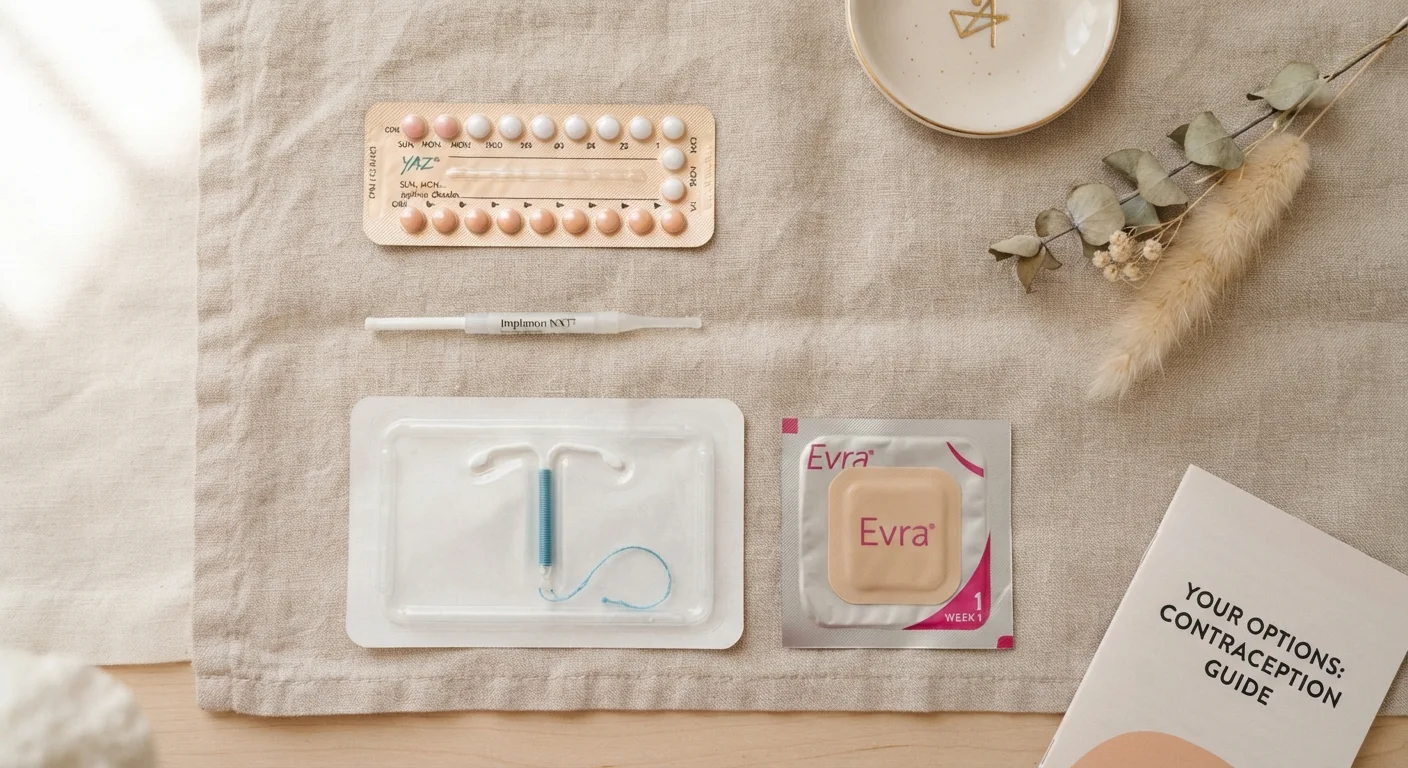
Combined oral contraceptive pills (containing both estrogen and progestin) are among the most studied contraceptive options available. They must be taken at roughly the same time each day. Missing doses significantly reduces effectiveness. They may also help regulate cycles and reduce certain menstrual symptoms.
Progestin-only pills (sometimes called the mini pill) are taken daily with a narrower timing window. They are often considered for people who cannot tolerate estrogen due to migraines with aura, history of blood clots, or cardiovascular risk factors.
The patch is worn on the skin and changed weekly for three weeks, followed by a patch-free week. It delivers estrogen and progestin transdermally. Some individuals may experience skin irritation at the adhesive site.
The vaginal ring is inserted monthly, releasing a low daily dose of both hormones. It requires comfort with self-insertion and removal.
~65%
U.S. women using some form of contraception
According to CDC National Survey of Family Growth data, roughly 65% of women aged 15-49 use a contraceptive method.
14%
Contraceptive users relying on the pill
The oral contraceptive pill remains one of the most widely used hormonal methods in the United States, per CDC surveillance data.
<1%
Typical-use failure rate for implant
The subdermal implant has one of the lowest failure rates of any reversible contraceptive method, as documented in clinical effectiveness reviews.
Long-Acting Reversible Options: IUDs and Implants
Hormonal intrauterine devices (IUDs) are small, T-shaped devices inserted into the uterus by a healthcare provider. They release low levels of progestin locally and can remain effective for three to eight years depending on the specific device. Many users experience lighter periods or none at all over time.
The subdermal implant is a small, flexible rod inserted under the skin of the upper arm by a clinician. It releases progestin continuously and is effective for up to three years. It is among the most effective contraceptive options available, with a failure rate under 1% in both perfect and typical use because adherence is not user-dependent.
Both IUDs and implants are reversible - fertility generally returns promptly after removal - but neither protects against sexually transmitted infections.
Hormonal Methods Do Not Prevent STIs
None of the hormonal contraceptive methods described here - pills, patches, rings, IUDs, implants, or injectables - offer any protection against sexually transmitted infections (STIs), including HIV. Barrier methods such as condoms remain the most effective tool for reducing STI transmission risk. Discuss your full reproductive health picture with a provider to determine whether combining methods makes sense for your situation.
Injectables: A Middle-Ground Option
Progestin-only injections are administered by a healthcare provider every approximately three months. They offer a longer-acting window than daily pills without requiring insertion of a device, making them appealing for some individuals. However, fertility may take longer to return after discontinuation compared to other methods - sometimes several months. This is an important consideration for those who may want to conceive in the near term.
Because each method carries its own set of considerations, eligibility criteria, contraindications, and potential interactions with other medications, a thorough discussion with a physician or certified nurse practitioner is essential before starting, switching, or stopping any hormonal contraceptive. There is no universally correct choice - only the most appropriate one for each individual's circumstances.
This article is intended for general health education only and does not replace personalized medical advice. Consult a qualified healthcare provider for guidance specific to your health history and reproductive needs.
The content on this site is for informational purposes only and is not a substitute for professional advice. Always consult a qualified professional for guidance specific to your situation.