

What Makes a Cross-Genre Collaboration Actually Work
Not every unexpected pairing becomes a cultural moment. Some cross-genre collaborations earn a permanent place in the American musical conversation; others are quickly forgotten. The difference usually comes down to one thing: genuine creative tension.
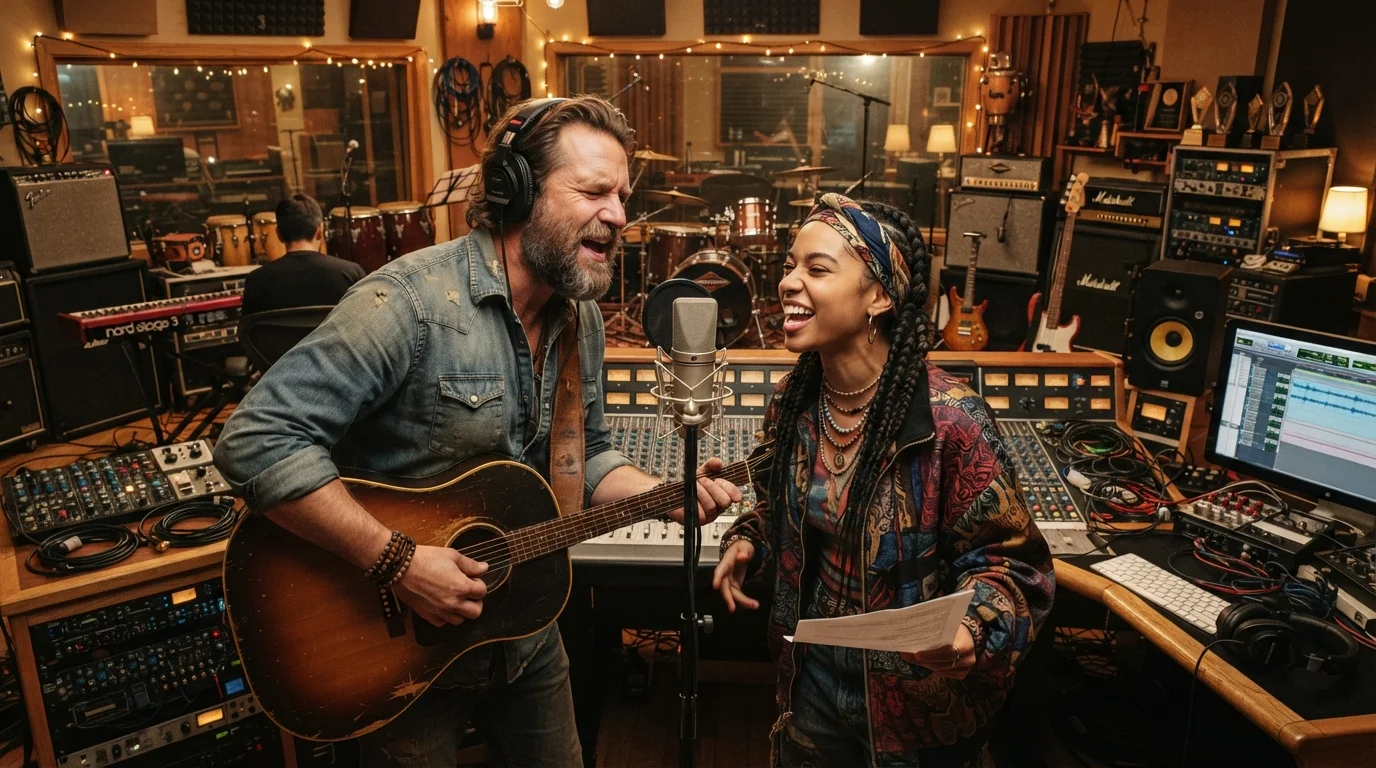
When two artists from different worlds meet on a track, something interesting happens - each one has to figure out how much of their own identity to hold onto and how much to let the collaboration reshape. The pairings that resonate tend to be the ones where both artists are visibly challenged. There's a productive friction that listeners can feel, even if they can't always name it.
This is distinct from a simple "featured artist" moment where one performer shows up on another's track without meaningfully engaging with their style. True cross-genre collaboration changes both parties. It asks something of them - and of the audience.
“The best collaborations happen when both artists are slightly outside their comfort zone. That productive discomfort is exactly where interesting music lives.”
— Questlove, Musician, producer, and cultural commentator
The Role of Audience Overlap and Cultural Timing
Timing matters enormously. Many cross-genre collaborations that felt ahead of their time were later recognized as genre-defining - but only once American audiences had caught up culturally. The inverse is also true: a pairing that might have been electrifying five years earlier can land flat if the cultural appetite has already moved on.
Audience overlap is another underrated ingredient. When two artists share even a small but passionate common fanbase, that community often becomes the earliest and loudest advocates for the collaboration, helping it break through algorithmically and socially. Think of it as a Venn diagram: the more meaningful the overlap in the middle, the more likely the moment catches.
72%
Listeners open to cross-genre music discovery
A Spotify-commissioned listener survey found that a large majority of users reported discovering new genres primarily through featured-artist collaborations on familiar tracks.
2x
Streaming playlist placements for cross-genre hits
Industry analyses have noted that tracks blending two distinct genres often qualify for placement in multiple genre-specific editorial playlists, roughly doubling organic discovery opportunities.
It's also worth noting that genre itself is increasingly a fluid construct. As explored in our piece on hybrid sounds in modern music, the boundaries between country, rap, pop, and R&B have been dissolving for years - which means today's cross-genre collaboration is often less of a leap than it appears.
Iconic Pairings and What They Tell Us
History offers some instructive examples of collaborations that didn't just work commercially - they shifted cultural conversations.
What connects these kinds of moments is that each one revealed something true about where American culture actually was at a particular point in time. Cross-genre collaborations, when they're working at their best, function almost like cultural barometers. They don't just blend sounds - they surface affinities between communities that may not have officially recognized each other yet.
This connects to the broader idea of how artists reinvent themselves over time. A well-chosen collaboration can be a pivotal chapter in an artistic evolution - see how that dynamic plays out in our look at how artists reinvent themselves between albums.
Why Authenticity Is the Deciding Factor
The word "authentic" gets overused in music criticism, but it's genuinely useful here. Audiences are remarkably good at detecting when a cross-genre pairing is motivated purely by commercial calculation versus when it reflects a real artistic curiosity.
When a collaboration feels authentic, it's usually because both artists had creative agency over the final product - they weren't just lending their name or sound to someone else's track. The process behind a collaboration matters, even when listeners never see it. You can often hear the difference between a track where two artists genuinely puzzled through a creative problem together and one where a producer simply stitched two styles side by side.
Look Past the Surface Pairing
When evaluating a cross-genre collaboration, listen for whether both artists are genuinely influencing the track's structure and texture - not just trading verses. If you can clearly hear each artist pushing the other somewhere new, that's usually the sign of a collaboration with staying power. The credits can also tell you a lot: who wrote and produced the track often reveals how much creative equity each collaborator actually brought.
Cross-genre collaborations also have an interesting parallel in other entertainment spaces. Genre crossovers in modern TV follow a similar logic: the pairings that stick are the ones where the creative risks feel intentional, not incidental. The underlying principle - that meaningful genre-crossing requires earned creative permission - translates across mediums.
Ultimately, cross-genre collaborations matter because music doesn't exist in a vacuum. It's one of the most direct ways American artists signal cultural solidarity, curiosity, and evolution - to each other and to the audiences listening in.
Frequently Asked Questions
A collaboration feels forced when the pairing prioritizes novelty over genuine creative chemistry. If neither artist's style is stretched or challenged in a meaningful way, listeners can usually tell. The most resonant pairings reveal something new about both artists, not just a shared PR moment.
They can - but not automatically. A well-matched collaboration exposes each artist to the other's fan base and can open new streaming algorithm pathways. However, if the collaboration feels inauthentic to either artist's core audience, it risks confusing rather than expanding their fanbase.
Cultural significance usually comes when a collaboration captures a broader social moment - a shift in taste, identity, or generational attitude. When two genres merge on a popular track, it often reflects conversations already happening in American culture about who belongs where.
Not at all. Genre-crossing partnerships have been part of American music history for decades, from jazz-influenced pop in the mid-20th century to rock-rap hybrids in the 1980s and 1990s. What has changed is the speed at which these collaborations reach mass audiences through streaming and social media.
Producers are often the architects of genre-blending moments, creating sonic frameworks that can accommodate multiple styles. A skilled producer identifies the thread that connects two seemingly incompatible artists and builds the track around that common ground. <a href="/entertainment/music-artists/understanding-music-credits-who-actually-makes-a-hit-song">Understanding music credits</a> can help clarify just how central this role really is.
The content on this site is for informational purposes only and is not a substitute for professional advice. Always consult a qualified professional for guidance specific to your situation.