

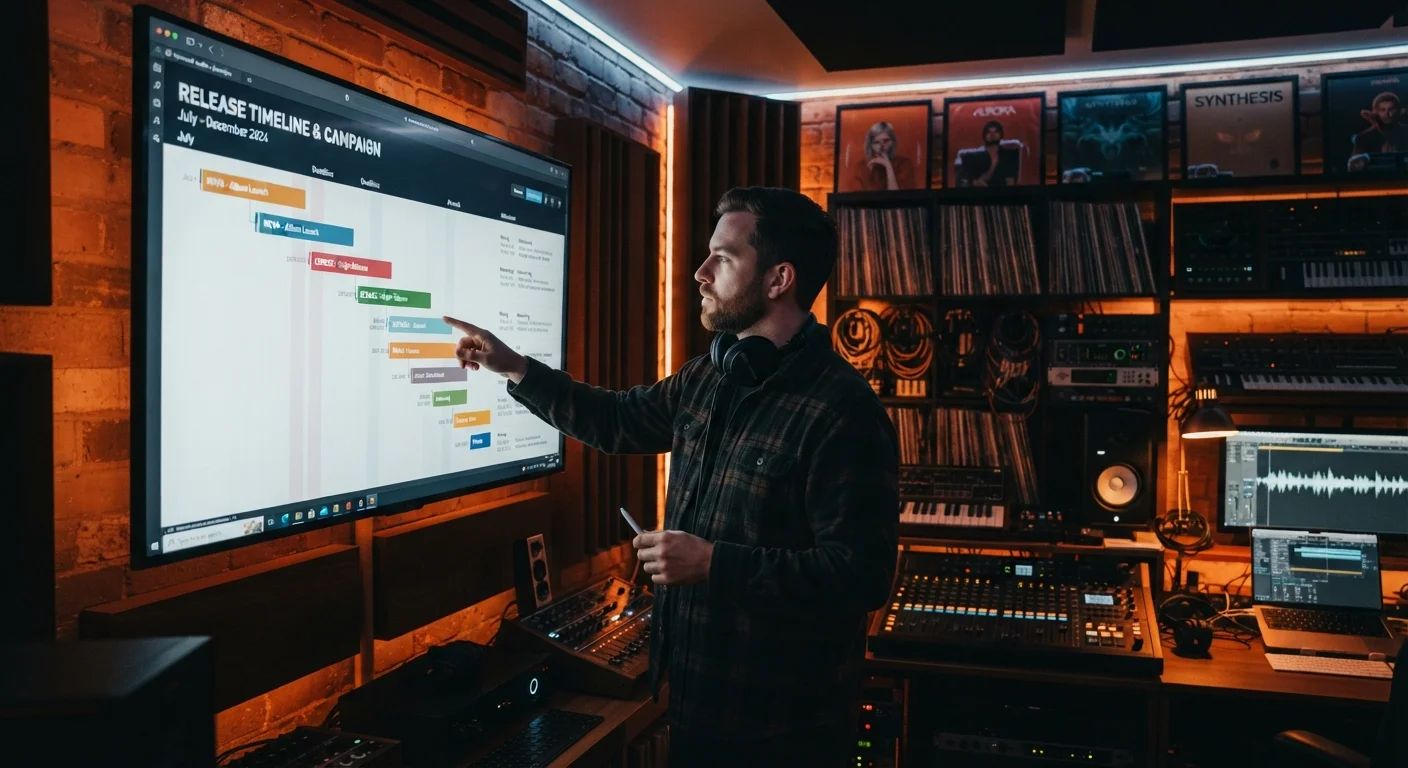
The Phases That Make Up a Modern Album Rollout
A hit album rarely arrives out of nowhere. Even releases that seem spontaneous are almost always the product of months of coordinated planning. The album cycle typically unfolds in distinct phases: the teaser period, the lead single drop, a sustained singles campaign, the album announcement, the release itself, and finally the touring and press cycle that follows.
Each phase serves a specific purpose. Early teasers - a cryptic Instagram post, a website countdown, a sudden social media wipe - are designed to spark fan speculation and earn media coverage before anything concrete is confirmed. The lead single then arrives as a definitive statement of direction, establishing the sonic and visual identity of the project. Subsequent singles maintain momentum, giving playlists, radio programmers, and streaming algorithms consistent new material to promote.
Understanding how this sequencing works helps explain why an artist might release four songs before an album even has a confirmed release date. It's not indecision - it's calibrated buildup. For fans who want to go deeper than the singles, our guide on what to pay attention to beyond the singles breaks down what else is worth tracking during a rollout.
12-18 months
Average major-label album cycle length
Industry analysts commonly cite a 12-to-18-month window as the standard active campaign period for a major-label album release.
3-5 singles
Pre-release singles per album campaign
Most major label rollouts deploy three to five singles ahead of an album release to sustain streaming momentum and radio play.
72 hours
Critical window for first-week streaming counts
Chart tracking organizations typically measure a release's debut performance over the first tracking week, with the opening 72 hours often setting the ceiling.
Visual Identity and the Role of the 'Era'
Modern album campaigns are as much visual as they are sonic. An artist's rollout now routinely includes a coordinated aesthetic - a color palette, fashion choices, set design language, and cover art - that extends across music videos, press shoots, and social content. This visual coherence is what fans often call an "era," a term that captures the holistic identity an artist inhabits for the duration of a cycle.
The era concept is central to how audiences engage with and remember albums. It transforms passive listening into a larger cultural experience - fans collect moments, debate the symbolism of choices, and build community around shared interpretation. This fan engagement isn't accidental; it's often engineered through deliberate ambiguity, Easter eggs, and interactive elements embedded in promotional rollouts.
How artists reinvent themselves between albums is itself a fascinating study in identity strategy, worth exploring alongside any discussion of rollout mechanics.
“The rollout is now as much a part of the artistic statement as the music. How you reveal something tells the audience how to feel about it before they've heard a single note.”
— Lyor Cohen, Global Head of Music, YouTube, and long-time music industry executive
Touring, Longevity, and the Cycle's Final Stretch
The album cycle doesn't end at release. In many ways, the release date is the midpoint. A touring leg - whether arena dates, festival sets, or club shows - extends an album's commercial life and gives it cultural staying power. Live performances introduce music to audiences who may have missed the streaming rollout, while driving additional sales of vinyl, merchandise, and tickets.
The economics of touring have become increasingly central to an artist's overall income, particularly as streaming royalty rates remain a complex topic in the industry. For a fuller picture of those financial dynamics, it's worth reading about how streaming changed the economics of music.
The cycle concludes - often quietly - when an artist stops promoting the current album and begins signaling a new direction. A wardrobe shift, a change in social media tone, or a collaborator announcement can all indicate that the next era is quietly beginning. The album cycle, it turns out, is less a line than a loop.
Reading the Signs of a New Rollout
If your favorite artist suddenly goes quiet on social media, deletes old posts, or changes their profile aesthetic, it's often an intentional signal that a new cycle is beginning. Paying attention to these soft signals - rather than waiting for the official announcement - gives fans a front-row seat to the strategy as it unfolds.
For comparison, the entertainment industry applies similar phased logic to film releases - the tension between traditional cinema runs and streaming debuts mirrors the timing debates artists face, as explored in our breakdown of theatrical release vs. streaming premiere.
Frequently Asked Questions
Most major-label album cycles run between one and two years, though some artists stretch theirs to three years with extended touring. Independent artists often work on shorter timelines due to budget and team constraints.
A lead single is the first song released ahead of an album, chosen to represent the project's sonic direction and attract attention. It's usually accompanied by a music video and a targeted promotional push across streaming and social platforms.
Releasing multiple singles sustains public interest over the months between announcement and release. Each drop generates a fresh news cycle and keeps the algorithm favor on streaming platforms, building catalog engagement ahead of the full project.
Streaming elevated the importance of first-week streams as a chart metric and shifted the emphasis toward individual song performance rather than full-album listening. It has also enabled surprise drops, where artists release albums with little or no advance promotion. For more context, see our coverage of <a href="/entertainment/music-artists/streaming-changed-music-forever-but-not-always-in-the-ways-artists-wanted">how streaming reshaped music economics</a>.
A soft rollout is a low-key, gradual build-up to a release - often beginning with cryptic social media posts, deleted content, or subtle website changes - rather than a loud, coordinated announcement. Artists use it to generate organic fan speculation before committing to a formal campaign.
No - rollout strategy varies widely based on an artist's career stage, label resources, genre, and audience. Independent artists often rely more heavily on social media and direct fan engagement, while major-label acts typically coordinate across publicity, radio, and retail simultaneously.
The content on this site is for informational purposes only and is not a substitute for professional advice. Always consult a qualified professional for guidance specific to your situation.