

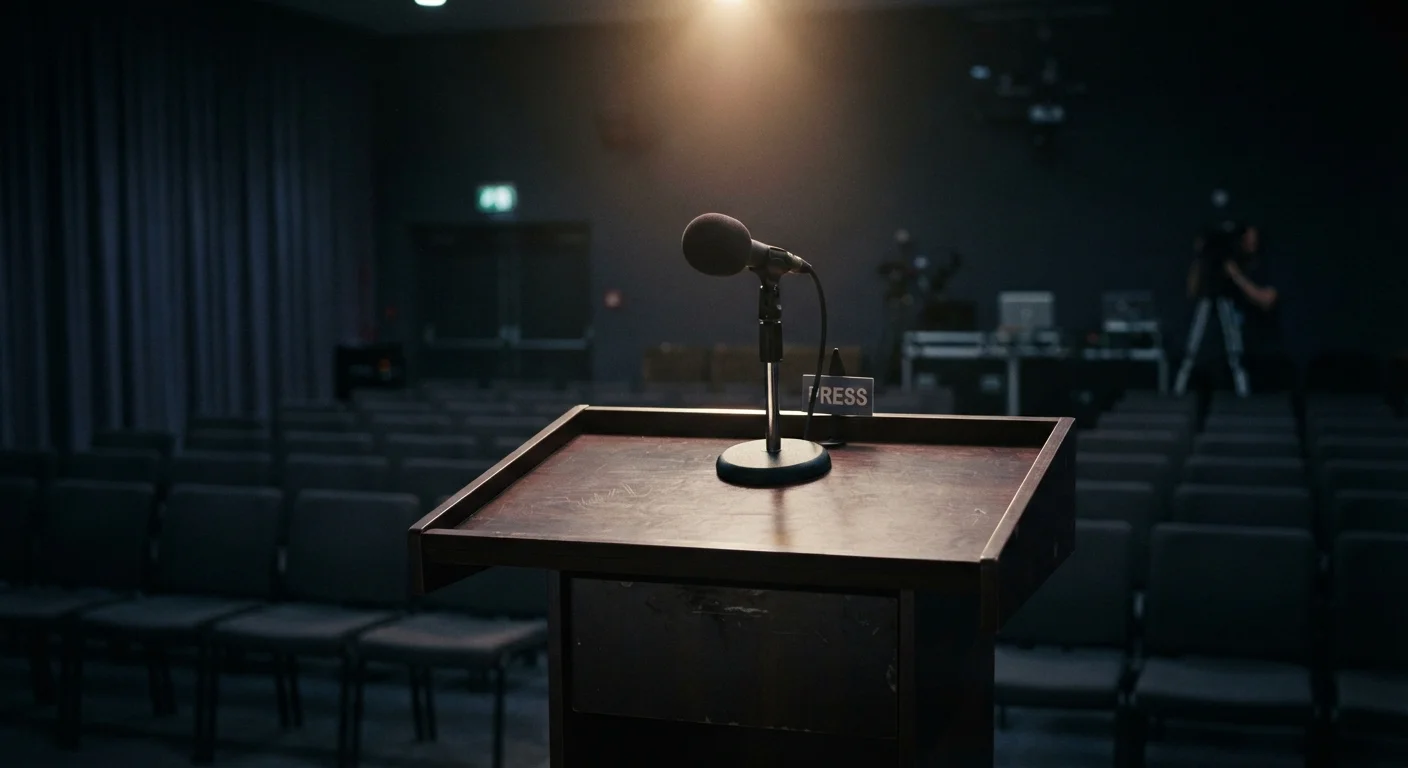
The Anatomy of a Scripted Apology
If you've watched enough celebrity controversies unfold, the apology that follows starts to feel eerily familiar. There's usually an opening acknowledgment that something happened, a pivot to the celebrity's internal emotional state, a vague reference to "learning and growing," and a closing appeal to fan loyalty. That's not an accident - it's a structure.
Crisis communications professionals often work from frameworks designed to protect a client legally while appearing emotionally genuine. The challenge is that these two goals can directly contradict each other. Admitting specific wrongdoing opens the door to legal liability; staying vague protects the legal position but reads as evasive to the public.
Understanding the specific language entertainment media uses is one way audiences have sharpened their ability to parse these statements critically.
“A real apology names the harm, centers the people harmed, and doesn't ask those people to do the emotional work of reassuring the person who caused it. Anything short of that is crisis management wearing the costume of accountability.”
— Aparna Nancherla, Comedian and cultural commentator, speaking on public accountability norms
What Audiences Have Learned to Watch For
Social media has essentially crowdsourced media literacy. When a celebrity drops an apology video at 11 p.m. on a Friday - historically a graveyard slot for news - audiences immediately clock the timing as an attempt to minimize coverage. When a statement says "I'm sorry if anyone was hurt," the conditional "if" becomes the most discussed word in the entire document.
51%
Americans skeptical of celebrity public apologies
A YouGov survey found that roughly half of American adults believe celebrity apologies are primarily motivated by protecting the celebrity's career rather than genuine remorse.
72 hours
Typical response window in crisis PR
Crisis communications professionals widely cite a 72-hour window as the standard timeframe for a public figure to respond to a breaking controversy before narrative control becomes significantly harder to regain.
Critics and media scholars point to several hallmarks of apologies that audiences tend to distrust: centering the celebrity's pain over the affected parties, excessive focus on intent rather than impact, and apologies that arrive only after sponsors or streaming platforms apply pressure. The sequence of events matters enormously.
For a deeper look at how the media pipeline shapes these moments before an apology even becomes necessary, see how celebrity scandals move from rumor to headline.
Platform, Timing, and the Message Behind the Message
Where a celebrity chooses to apologize says as much as what they say. A tearful Instagram video reaches the fanbase first, in an unmediated, emotionally resonant format. A formal written statement issued through a publicist signals legal caution. Appearing on a sympathetic podcast for a "candid conversation" allows narrative rebuilding under friendlier conditions than a press conference would permit.
Read the Whole Statement Carefully
When a celebrity apology drops, read it in full before reacting to headlines or clips. PR-crafted statements often include key concessions buried in the middle paragraphs and deflections placed prominently at the opening and close. The architecture of the statement is intentional - and worth examining critically.
Timing operates the same way. Quick apologies can signal responsiveness but also panic. Delayed apologies risk appearing calculated - like the celebrity waited to see which way public opinion was trending before committing. There's almost no timing that doesn't invite scrutiny, which is itself a feature of the current media environment.
All of this connects to the broader question of how public figures manage perception across every channel they inhabit. How celebrities manage their public persona across platforms offers useful context for understanding apologies as one tool in a much larger image-management system.
What a Credible Apology Actually Looks Like
Communications researchers and cultural critics broadly agree on what separates an apology that lands from one that backfires. The effective ones are specific - they name the harm, identify who was affected, and avoid burying accountability in qualifications. They don't spend more time on the celebrity's feelings than on the impact of their actions.
Crucially, words alone rarely do the work. Behavioral follow-through - charitable action, policy advocacy, visible changes in professional conduct - tends to determine whether an apology becomes the beginning of a credible redemption arc or a footnote in a longer controversy. Audiences have seen enough cycles to know the difference between the two.
Frequently Asked Questions
Apologies that use passive constructions like "mistakes were made" or focus on the celebrity's own feelings rather than the people harmed tend to register as insincere. Vague language, delayed timing, and apologies that coincide suspiciously with a project release also raise red flags for audiences and critics.
Research into crisis communications suggests that apologies can help, but only when they're specific, timely, and followed by visible behavioral change. A single statement rarely turns the tide on its own. <a href="/entertainment/celebrity-buzz/the-celebrity-comeback-what-factors-actually-determine-whether-one-succeeds">What actually drives a successful comeback</a> involves far more than one well-worded post.
Most are crafted collaboratively between the celebrity, their publicist, and sometimes a crisis communications firm or entertainment lawyer. Legal considerations often shape which specific words can and cannot appear, particularly if litigation is possible.
A non-apology is a statement that mimics the structure of an apology without actually accepting responsibility. Common forms include "I'm sorry you felt that way" or "I regret that this happened," both of which shift focus away from what the speaker did and onto how others reacted.
Social media allows celebrities to control the message entirely - no follow-up questions, no live stumbles, no hostile interviewer. It also reaches their fanbase directly before traditional media can frame the narrative. The platform choice itself is a calculated communications decision.
The content on this site is for informational purposes only and is not a substitute for professional advice. Always consult a qualified professional for guidance specific to your situation.