
Summary
18 items · 3-10 minutes
Why a Pre-Trip Check Is Worth the Two Minutes
Most vehicle breakdowns and a significant share of accidents are preventable. Mechanical failures such as tire blowouts, brake fade, and low fluid levels often give warning signs that a quick inspection would catch before they become emergencies on the road. Yet the average driver skips any form of pre-trip review on the vast majority of trips.
This checklist is designed for everyday drivers - not mechanics. You don't need special tools or technical knowledge. What you need is a repeatable habit. Run through these items before you back out of the driveway, and you'll drive with greater confidence every time. For deeper seasonal preparation, see our guide on seasonal vehicle maintenance to understand what additional checks extreme temperatures demand. This checklist is also one component of responsible car ownership - the annual car ownership checklist covers the broader picture.
Exterior & Tires
Under the Hood
Inside the Cabin
Driver Readiness
Emergency Preparedness
Tools You May Want on Hand
The majority of these checks are purely visual or tactile - requiring nothing more than your eyes and hands. A few items are made easier with basic supplies kept in or near your vehicle.
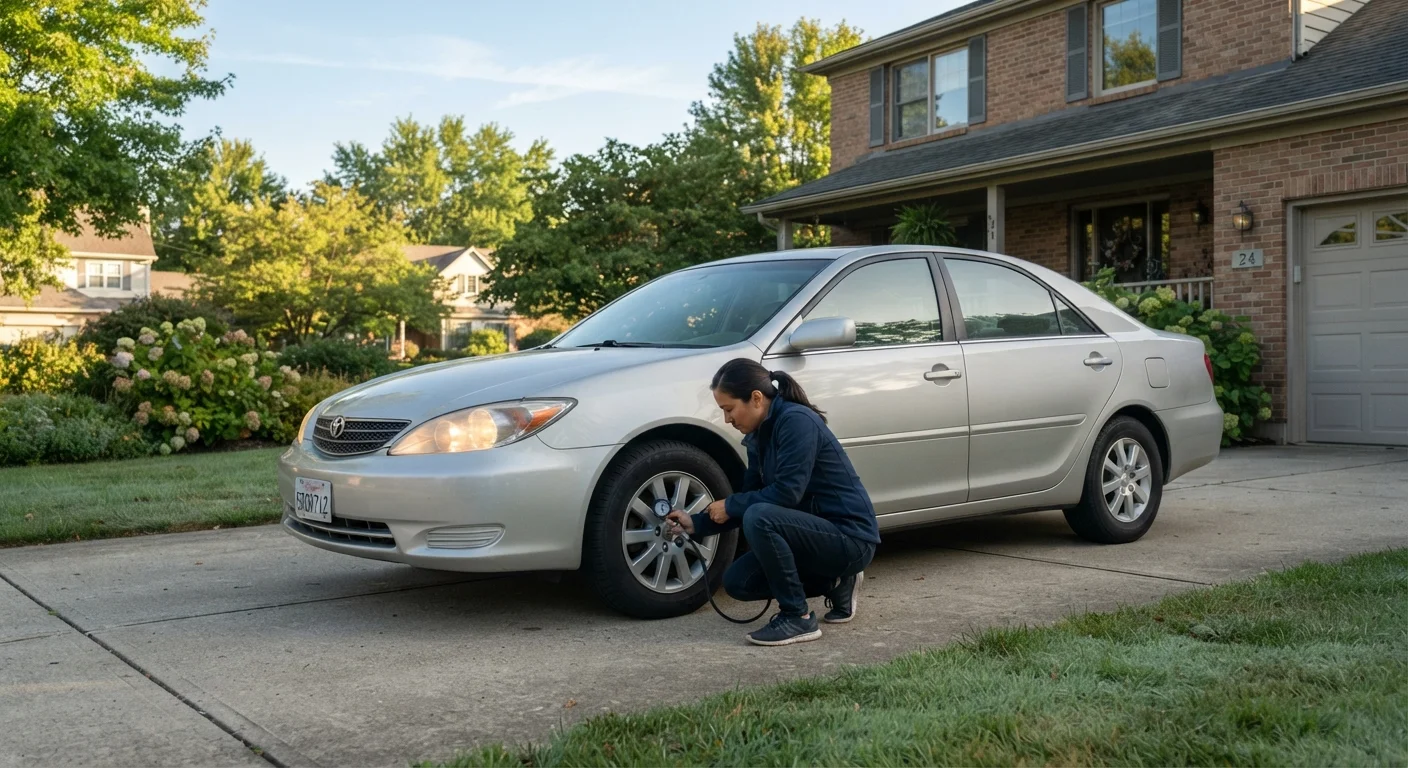
Tire Pressure Gauge
Measures actual tire PSI so you can compare against the vehicle's recommended pressure - visual inspection alone cannot confirm adequate inflation.
Engine Oil Dipstick (built-in)
Used to check oil level and condition; located under the hood and already part of your vehicle.
Flashlight or Headlamp
Useful for checking under the vehicle, inspecting tires, and performing checks in low-light conditions.
Basic Emergency Kit
Includes jumper cables, a reflective triangle or flares, a first-aid kit, and a flashlight - kept in the trunk for roadside situations.
Key Risks and What to Do When Something Fails a Check
Not every failed check means you can't drive. Context matters. A nearly empty washer fluid reservoir is low urgency; a tire that looks visibly flat or a warning light you don't recognize is high urgency. The general rule: if you're uncertain about a vehicle safety system - brakes, steering, tires, lights - err on the side of addressing it before driving rather than after.
Do Not Drive on a Suspected Brake or Tire Failure
If your brake pedal feels soft or spongy, if you hear grinding when braking, or if a tire appears visibly flat or damaged, do not drive the vehicle. These are not drive-and-monitor situations. Have the vehicle towed or inspected by a qualified mechanic before resuming use. Driving on compromised brakes or tires dramatically increases stopping distance and loss-of-control risk.
If your vehicle is due for a comprehensive inspection or you notice something outside your ability to assess, have a qualified mechanic look at it before your next trip. Continuing to drive on a suspected brake or tire issue can create a hazardous situation for you and other road users. For broader vehicle care habits, explore the Car Maintenance hub for practical guidance across maintenance topics.
Dashboard Warning Lights Are Not Optional
Modern vehicles use warning lights to communicate real-time issues with safety-critical systems. Ignoring a persistent warning light - particularly for oil pressure, brake system, battery, or engine temperature - can allow a manageable problem to become a serious mechanical failure or safety hazard. If a light comes on that you cannot identify, consult your owner's manual or have the vehicle scanned by a qualified technician before your next trip.
The content on this site is for informational purposes only and is not a substitute for professional advice. Always consult a qualified professional for guidance specific to your situation.