

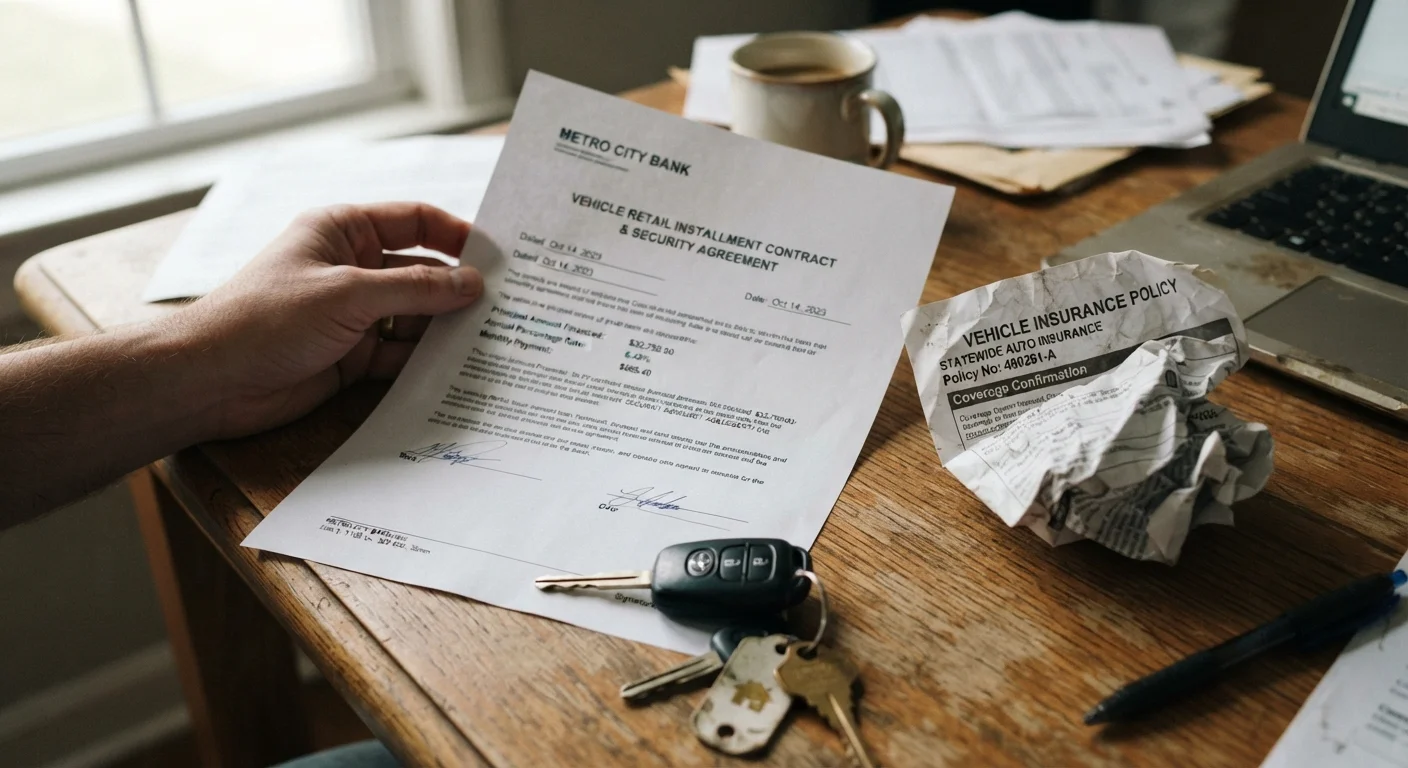
The Depreciation Problem That Creates the Gap
The moment a new car leaves the dealership lot, its market value drops - sometimes by several thousand dollars within the first few months. This rapid depreciation is the root cause of the coverage gap. A buyer who finances most of the purchase price may immediately owe more on the loan than a standard auto insurer would pay if the vehicle were totaled.
Standard comprehensive and collision policies pay out the vehicle's actual cash value (ACV) at the time of loss - what a willing buyer would pay for it on the open market. That figure can be substantially lower than the outstanding loan balance, especially in the early months of a financing agreement.
~20%
Average new car value lost in year one
Industry depreciation data consistently shows new vehicles lose roughly 15-25% of their value within the first twelve months of ownership.
~44%
New car buyers who finance 90%+ of purchase price
Federal Reserve and consumer lending data suggest a significant share of new vehicle purchases involve minimal down payments, increasing the likelihood of negative equity.
72+ months
Average new car loan term in recent years
Longer loan terms have become common, meaning principal paydown is slower and the window of negative equity extends further into ownership.
For a deeper look at all the ongoing financial obligations tied to owning a vehicle, see The True Cost of Owning a Car in America.
How Gap Insurance Actually Works
If your car is totaled in an accident or stolen and not recovered, here's the sequence of events gap insurance addresses:
- Your primary insurer calculates the vehicle's actual cash value and issues a settlement check - minus your deductible.
- That payment goes toward your outstanding loan or lease balance.
- If a remaining balance exists after the primary payout, gap insurance covers that shortfall up to the policy's limit.
The result is that you're not left paying a monthly loan installment on a car you no longer have. Gap insurance does not pay for a replacement vehicle, cover mechanical repairs, or apply to any claim that doesn't result in a total loss.
Gap Insurance Is Not a Substitute for Collision Coverage
Gap insurance only activates after your primary insurer has already paid out a total-loss settlement. If you don't carry comprehensive and collision coverage - which some lenders require anyway - gap insurance has nothing to supplement and won't help you. The two products must work together.
It's also worth separating fact from fiction on auto coverage more broadly - Car Insurance Myths That Cost Drivers Real Money addresses several misunderstandings that lead drivers to carry the wrong protection.
Who Actually Needs Gap Coverage
Gap insurance isn't universally necessary. The situations where it provides meaningful protection are fairly specific:
- Low or no down payment: Financing 90-100% of a vehicle's price means you're almost certainly underwater from day one.
- Long loan terms: 60-, 72-, or 84-month loans build equity slowly. Depreciation often outpaces principal paydown for several years.
- Leased vehicles: Most lease agreements require gap coverage, and many include it - but verify before assuming.
- High-depreciation vehicles: Some makes and models lose value significantly faster than average. Check depreciation data before assuming you're in the clear.
Conversely, drivers who put down 20% or more, have a short loan term, or purchased a used vehicle that has already absorbed the sharpest depreciation curve are less likely to benefit. For those situations, evaluate whether full coverage itself still makes financial sense - our guide on when to drop collision and comprehensive coverage walks through that analysis.
Check Your Loan Balance vs. Vehicle Value Annually
Once a year, compare your outstanding loan balance against your car's current market value using a reputable valuation resource. When your loan balance dips below the vehicle's value, you've exited negative equity territory and can consider dropping gap coverage to reduce costs.
Where to Buy It and What to Watch Out For
Gap insurance is sold through three main channels, each with different cost structures:
- Auto insurers
- Many major carriers offer gap coverage as an add-on to an existing policy. Premiums are typically modest and paid alongside your regular policy.
- Banks and credit unions
- Some lenders bundle gap protection into loan agreements. Review the terms carefully - pricing and coverage limits vary.
- Dealerships
- Dealers commonly offer gap coverage, often rolled into the loan itself. This convenience comes at a cost: you'll pay interest on the gap premium over the life of the loan, increasing total outlay.
Before purchasing, confirm the policy's maximum payout cap, whether your deductible is excluded, and how the payout interacts with any negative equity rolled from a previous vehicle loan.
This article is for general informational purposes only and does not constitute financial, insurance, or legal advice. Consult a licensed insurance professional or financial adviser for guidance specific to your situation.
Frequently Asked Questions
Standard gap insurance does not cover your collision or comprehensive deductible. Some lenders offer a 'gap plus' product that reimburses the deductible, but this is an add-on, not the default. Confirm exactly what your policy covers before purchasing.
Yes, in most cases you can add gap coverage after purchase, as long as your loan balance still exceeds the vehicle's actual cash value. Many auto insurers allow you to add it mid-policy. Check with your insurer or lender for any time restrictions.
You generally need gap insurance only until your loan balance falls below the car's current market value. For most buyers, this happens within two to three years of purchase, depending on the loan term and how quickly the vehicle depreciates.
Gap insurance is not required by any US state law. However, some lenders and leasing companies may require it as a condition of your financing agreement. Always review your contract to understand any mandatory coverage requirements.
Pricing varies, but gap coverage purchased through a standalone auto insurer is often less expensive than dealer-financed gap products rolled into your loan. Because interest accrues on dealer-sold gap premiums, the total cost can be significantly higher over time. Compare options and read terms carefully.
The content on this site is for informational purposes only and is not a substitute for professional advice. Always consult a qualified professional for guidance specific to your situation.