

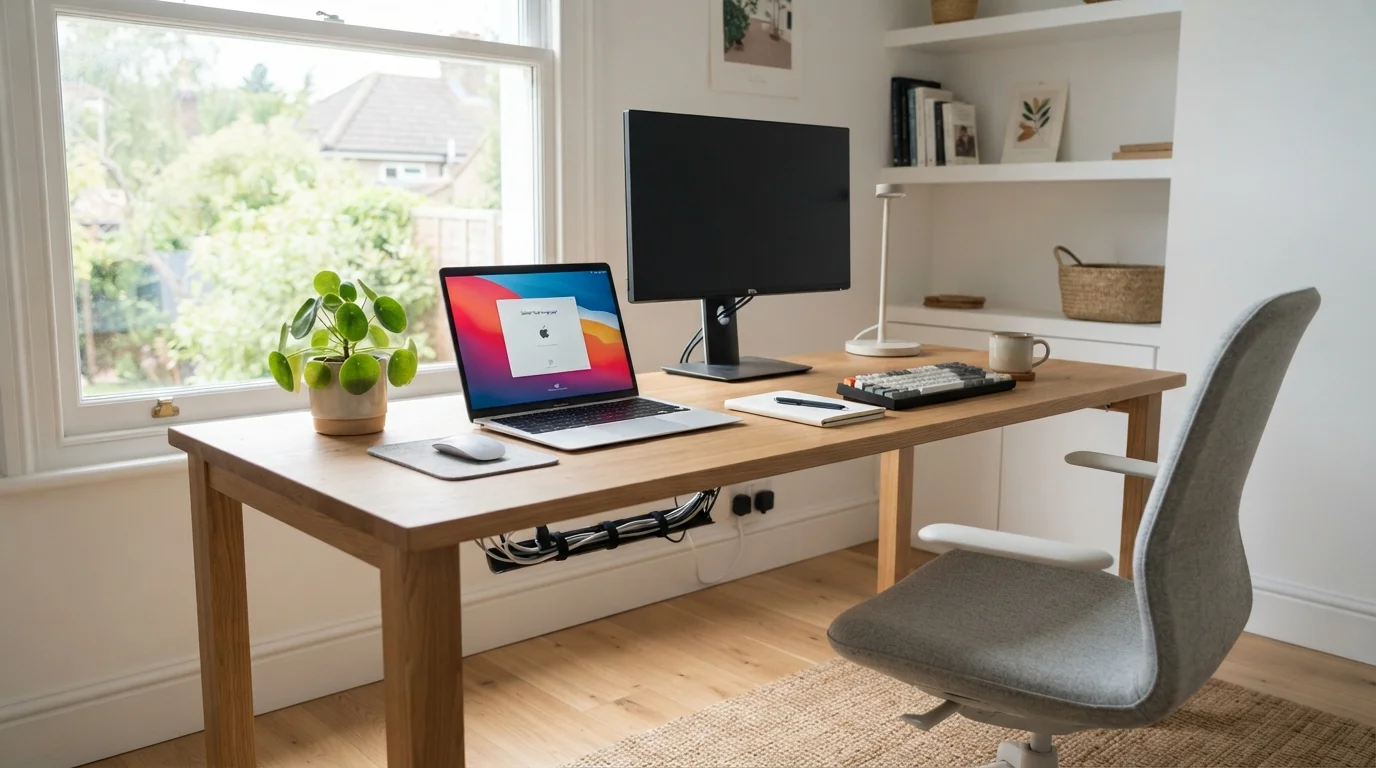
Why First-Day Setup Decisions Have Long-Term Consequences
A new computer arrives feeling clean and fast - but without deliberate setup, that state rarely lasts. The choices you make in the first hour determine how secure, organized, and maintainable the machine will be months and years down the line. Security gaps left open on day one are often the ones exploited later. Folders that never get organized tend to stay chaotic. Backups that aren't configured before data accumulates are the backups that aren't there when a drive fails.
This guide walks through the core tasks in the order that makes sense: securing the system before adding your personal information, organizing storage before files pile up, and establishing habits that run automatically in the background. Think of it as laying a proper foundation rather than renovating later.
For those who want to go deeper on keeping a home computer secure over time, our guide on practical home computer security covers strong passwords, safe browsing, and ongoing maintenance in more detail. If you're setting up other devices alongside your computer, what new smartphone users should know in the first week covers the same first-principles approach for mobile.
What you will need
What You'll Need Before You Begin
Operating system update utility
Used to download and install all pending OS and security patches before first use.
Password manager application
Stores and generates strong unique passwords for every account you create on this machine.
External hard drive or cloud backup service
Provides an off-device copy of your data using Time Machine (Mac) or Backup and Restore (Windows).
USB flash drive
Useful for creating a bootable recovery drive in case the system becomes unbootable after a serious issue.
Having your prerequisites and tools ready before you start prevents interruptions mid-setup - particularly important during the update and encryption steps, which don't respond well to being paused.
Step-by-Step Setup Process
Run all system updates immediately
Before touching anything else, open your system's update utility. On Windows, go to Settings > Windows Update. On macOS, open System Settings > General > Software Update. Install everything available, including any firmware updates, then restart when prompted. Repeat until no further updates appear - it sometimes takes two or three passes.
Set up your primary user account properly
During initial setup - or immediately after - create a user account tied to a real email address you control. Use a strong, unique password (your password manager can generate one). On Windows, you can choose a local account instead of a Microsoft account if you prefer not to sync data to the cloud. On macOS, your Apple ID becomes the primary account, so ensure it already has two-factor authentication enabled before proceeding.
Create a standard user account for daily use
Your setup account is typically an administrator. Add a second, standard-privilege account to use for everyday computing. On Windows: Settings > Accounts > Family & other users > Add account. On macOS: System Settings > Users & Groups > Add User, choosing Standard as the account type. Log out of the admin account and use the standard one going forward.
Enable built-in encryption
Disk encryption protects your files if the machine is ever lost or stolen. On Windows, search for BitLocker in the Start menu and turn it on for your main drive - save the recovery key somewhere safe outside the computer. On macOS, FileVault is found under System Settings > Privacy & Security. Both tools encrypt in the background and have minimal impact on day-to-day performance on modern hardware.
Configure a backup solution before adding any data
The best time to start backing up is before you have anything to lose - that way the habit is established when it matters most. Connect an external drive and enable Time Machine on macOS or Backup and Restore on Windows. If you prefer cloud backup, configure it now rather than after files have accumulated. Aim for at least two copies of important data: one local, one off-site or cloud-based.
Organize your storage from the start
Create a simple, consistent folder structure before files start piling up. A practical starting point: top-level folders for Documents, Photos, Projects, and Downloads (treated as a temporary inbox, cleared regularly). Resist the habit of saving everything to the Desktop - it becomes cluttered fast and makes backup management harder. A clear structure now prevents hours of reorganization later.
Install only what you actually need
New computers - especially Windows machines - often come preloaded with trial software, games, and manufacturer utilities you may never use. Uninstall anything you don't recognize or need: on Windows via Settings > Apps, on macOS by dragging apps to the Trash or using the Applications folder. A leaner system is faster, easier to back up, and has a smaller attack surface for security threats.
Use a Password Manager From the Start
Setting up a password manager on day one means every account you create on this machine gets a unique, strong password from the beginning. Password managers work across devices and browsers, so you won't need to remember anything beyond one master password. This single habit eliminates the most common source of account compromises for everyday users.
Avoid Using an Admin Account Daily
Logging in every day as an administrator means any malicious software that runs on your machine inherits full system privileges. Create a standard user account for daily use and reserve the admin account for installing software or changing system settings. This is one of the simplest structural defenses available and costs nothing to implement.
Don't Skip Updates on Day One
Computers shipped from the factory often carry months of accumulated OS vulnerabilities. Running updates before doing anything else - including logging into personal accounts or browsing the web - closes those gaps before they can be exploited. On both Windows and macOS, the update process can take 20-40 minutes depending on the volume pending, so start it first and let it run while you gather the rest of what you need.
After Setup: Building Good Ongoing Habits
Once your machine is configured, a few recurring habits keep it running well. Check for software updates monthly if your system isn't set to do so automatically. Review what's installed every few months and remove anything unused. Confirm your backup is actually running by periodically checking when it last completed - a backup that stopped working silently is worse than no backup, because it creates a false sense of security.
Security and organization habits compound over time. A machine set up with care on day one - updated, encrypted, backed up, and logically organized - is meaningfully easier to maintain, recover from problems, and hand off or resell responsibly. The same principle applies broadly: good foundations, whether for a computer setup or a financial safety net, are far easier to establish early than to build retroactively.
The content on this site is for informational purposes only and is not a substitute for professional advice. Always consult a qualified professional for guidance specific to your situation.