

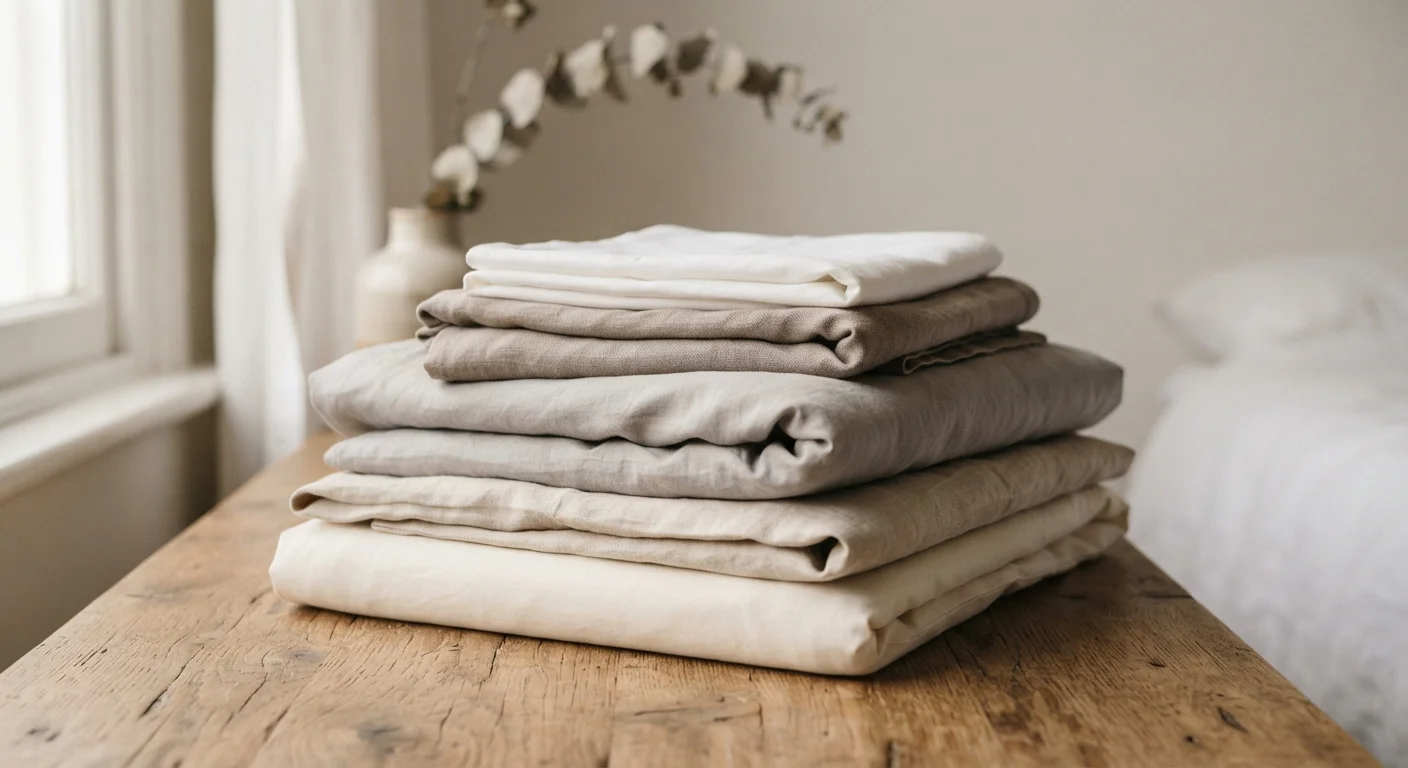
The Thread Count Myth - And How It Took Hold
Walk into any linen department and you'll see thread count front and center on every package: 400, 800, even 1,500. The implication is straightforward - higher is better. But that framing was largely shaped by marketing, not textile science.
Thread count refers to the number of horizontal (weft) and vertical (warp) threads woven into one square inch of fabric. In theory, more threads per inch can produce a finer, softer weave. In practice, manufacturers discovered a loophole: by using multi-ply yarns - where two or three thinner threads are twisted together and counted individually - they could inflate the number dramatically without improving the fabric's actual quality. A sheet advertised as 1,000-count may simply use lower-grade, thinner yarn twisted together to hit an impressive-sounding figure.
The result is a metric that has become more useful as a sales tool than as a genuine quality indicator. Understanding what actually drives sheet performance requires looking at three other factors: fiber type, weave construction, and finishing.
Myth
A higher thread count always means a softer, higher-quality sheet.
Fact
Thread count is easily manipulated through multi-ply yarn counting and tells you little about actual fiber quality or comfort.
Manufacturers can inflate thread counts by twisting multiple thin threads together and counting each strand separately. A 1,000-count sheet made from short-staple cotton in a multi-ply construction will typically feel rougher and wear out faster than a 300-count sheet woven from quality long-staple cotton. Thread count has a useful range - roughly 200 to 400 - beyond which returns diminish rapidly and inflated numbers become more likely.
Myth
Egyptian cotton is always the finest cotton available.
Fact
"Egyptian cotton" is a geographic and marketing label, not a fiber-quality guarantee - much of what carries that name uses short-staple fiber.
The label "Egyptian cotton" refers to cotton grown in Egypt, but it doesn't specify the staple length or grade of the fiber. Industry investigations and textile researchers have documented widespread mislabeling and blending in the supply chain. Long-staple and extra-long-staple varieties grown in Egypt can be excellent, but the label alone is not sufficient confirmation. Look for transparency about staple length from the manufacturer rather than relying on geographic branding.
Myth
Sateen sheets are always better quality than percale sheets.
Fact
Sateen and percale are different weave constructions suited to different preferences - neither is inherently superior.
Sateen's silkier feel comes from exposing more thread surface, which creates a smooth, somewhat lustrous finish. Percale's tighter over-under weave produces a crisper, cooler feel with better durability and breathability. Sateen can snag more easily and may trap more heat. The right weave depends on climate, sleep temperature, and personal texture preference - not which one costs more.
Myth
Sheets that feel very soft in the store will stay that way after washing.
Fact
In-store softness is often the result of finishing treatments that wash out, not an indicator of lasting fabric quality.
Chemical softeners, starch, and wrinkle-resistance finishes are routinely applied during manufacturing and retail packaging. These agents give sheets an appealing hand feel at point of sale but degrade with laundering. A sheet's true character - its texture, durability, and comfort over time - becomes apparent after several washes. Reading verified long-term owner reviews can be more informative than any in-store touch test.
What Fiber, Weave, and Finishing Actually Do
Once you move past thread count, three variables do the real work in determining how sheets feel and how long they last.
200-400
Thread count range where quality gains are meaningful
Textile and consumer research consistently finds diminishing returns beyond 400 thread count, with inflated multi-ply counting becoming common above that threshold.
~30%
Of sheets labeled Egyptian cotton may be mislabeled
Industry testing by textile trade organizations has found significant mislabeling rates on sheets marketed as Egyptian cotton in mass-market retail.
Fiber Type
The raw material of a sheet defines its baseline character. Long-staple cotton varieties - where individual fibers are longer than average - produce smoother, more durable yarn because there are fewer fiber ends to pill or fray. Shorter-staple cotton, by contrast, tends to feel rougher and deteriorate faster, regardless of thread count. Linen is naturally breathable and moisture-wicking, making it a strong option for warm sleepers, though it starts stiff and softens with use. Tencel (lyocell) is derived from wood pulp and offers silky softness with notable moisture management. Each fiber has genuine trade-offs - no single material suits every preference or climate.
Weave Construction
Percale and sateen are the two most common weave styles. Percale uses a simple one-over, one-under pattern that produces a crisp, matte finish with good airflow - a practical choice for people who sleep hot. Sateen weaves more threads over the surface, creating a lustrous sheen and a smoother hand feel, but with less breathability and some susceptibility to snagging. Twill weaves, used in flannel, create a diagonal rib that traps warmth. The weave determines texture, drape, and durability as much as anything else.
Finishing Treatments
Sheets often receive chemical treatments during manufacturing - softeners, wrinkle-resistance agents, and brighteners - that affect how a sheet feels in-store. These treatments wash out over time, sometimes revealing a coarser fabric underneath. Sheets that feel exceptional on first touch but deteriorate quickly after laundering are often relying heavily on finishing. A more reliable test is how the sheet feels after several washes, not in its original packaging.
Watch Out for "Soft Touch" Finishing
Sheets treated with heavy chemical softeners may feel luxurious when new but reveal a noticeably coarser texture after repeated washing. If a sheet feels dramatically different after its first few laundering cycles, finishing - not fiber quality - was doing most of the work. Pre-washing before judging a sheet's true feel is a useful habit.
The content on this site is for informational purposes only and is not a substitute for professional advice. Always consult a qualified professional for guidance specific to your situation.