

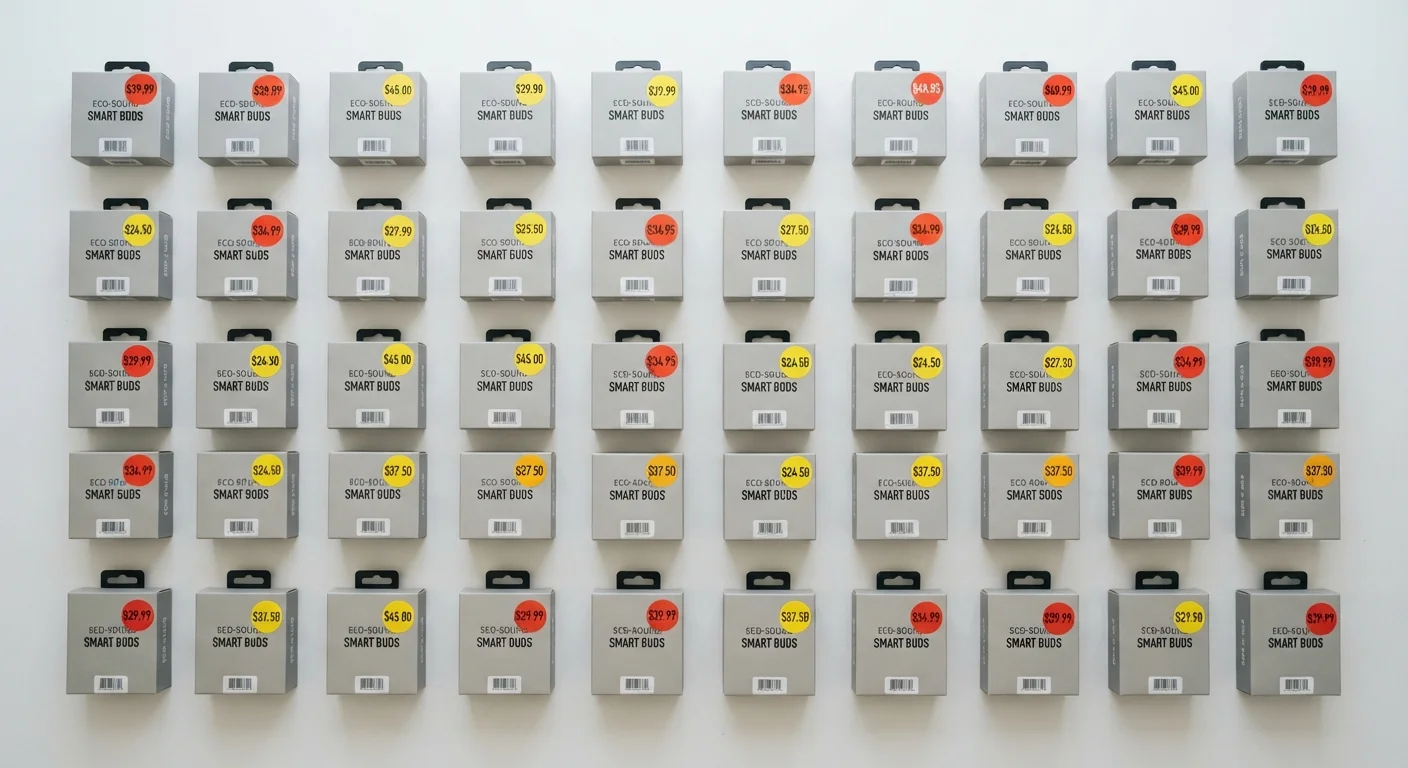
The Cost Stack Behind Every Price Tag
When a retailer prices a product, they're not just adding a markup to wholesale cost. They're recovering a layered stack of expenses: warehousing, logistics, return processing, customer service, payment processing fees, and the cost of the physical or digital shelf space itself. Two retailers buying the same item at the same wholesale price can arrive at very different retail prices simply because their operating cost structures differ.
A large-format warehouse retailer with high inventory turnover and minimal service overhead can absorb lower margins. A specialty retailer offering in-store expertise, liberal return windows, and dedicated support staff needs higher margins to sustain those services. Neither is necessarily overcharging - they're recovering different real costs.
Compare What's Included, Not Just the Number
Before assuming the cheaper retailer wins, verify the warranty terms, return policy, and whether the item ships from an authorized distributor. A $15 price difference can evaporate quickly if returning a defective item costs $12 in shipping. Factor total cost into any price comparison.
This is why comparing prices across retailers without comparing what each includes - shipping, returns policy, warranty support - can be misleading. The hidden costs behind a deal often close the gap between a cheap and expensive retailer.
Exclusivity, MAP Agreements, and Manufacturer Control
Not all retailers have equal access to the same products at the same terms. Manufacturers frequently use exclusive distribution agreements to limit which retailers can carry certain SKUs, bundles, or configurations. An exclusive retailer may be the only legal source for a particular color, bundle, or model variant - which removes price competition entirely for that specific version.
Even where products are widely distributed, manufacturers often set a Minimum Advertised Price (MAP) - a contractual floor below which a retailer agrees not to publicly display a price. MAP policies are designed to protect brand perception and prevent a race to the bottom that would squeeze retailers out of the category. The result is that many retailers advertise at the same price, even when their underlying costs differ.
~20%
Typical price dispersion for identical goods online
Research published in academic economics journals has consistently found that price dispersion of 15-25% for identical products across online retailers persists even when consumers can easily compare prices.
Millions/day
Price changes on major e-commerce platforms
Industry analysts have documented that large e-commerce platforms make millions of automated price adjustments daily, reflecting real-time competitive and demand signals.
For certain high-demand or specialty categories, geographic distribution rights also come into play - a retailer in one region may have negotiated terms that others haven't. This is particularly common in categories like electronics, automotive parts, and appliances. See what to know before buying across major categories for category-specific dynamics.
Dynamic Pricing and the Moving Target
Even within a single retailer, price variation is constant. Algorithmic pricing systems - used by most major e-commerce platforms - adjust prices in near real time based on competitor pricing, demand signals, inventory levels, and sometimes browsing behavior. A product you check on Monday morning may cost more or less by Friday afternoon, without any sale being announced.
This is why screenshots and price-tracking tools exist: prices genuinely fluctuate. The practice is widespread and legal, but it creates a moving target for comparison shoppers. How dynamic pricing algorithms work is worth understanding before assuming a price you saw yesterday is the price you'll pay today.
Seasonal Pricing Is Predictable
Major retail categories follow well-documented markdown cycles. Appliances, electronics, and home goods tend to see genuine price reductions at predictable points in the retail calendar - not just during widely advertised promotional events. Knowing these patterns in advance is more reliable than reacting to urgency-based marketing.
Seasonality adds another layer. Retailers follow predictable markdown calendars tied to inventory cycles and promotional events. Understanding when retailers actually mark things down can help you time larger purchases more strategically rather than reacting to marketing urgency.
What Price Differences Tell You - And What They Don't
A lower price at one retailer is not automatically a better deal, and a higher price is not automatically a rip-off. The price gap may reflect real differences in what you're getting: authorized versus gray-market inventory, included accessories, warranty coverage, or return flexibility.
It may also reflect nothing meaningful - just a retailer that hasn't updated its pricing algorithm recently, or one that priced aggressively to acquire a new customer. The honest answer is that a price difference alone tells you the gap exists; it doesn't explain whether closing that gap with a purchase is smart.
When evaluating a significant price difference, ask: Is this the same model number and configuration? Does the cheaper source include a manufacturer warranty? What are the shipping and return terms? Sometimes the pricier option saves money over time - the trade-off between upfront cost and long-term value depends on the category and your specific use case.
Frequently Asked Questions
Yes, completely legal. Retailers are free to set their own prices above any manufacturer minimums. Price differences reflect each retailer's individual cost structure, margin goals, and competitive strategy - not any agreement to fix prices.
Third-party marketplace sellers often have lower overhead than branded retail operations. However, they may also sell older inventory, gray-market units, or products without manufacturer warranties - factors worth checking before purchasing.
MAP stands for Minimum Advertised Price - a floor set by manufacturers below which retailers agree not to publicly advertise a product. It doesn't prevent a retailer from selling lower in some cases, but it limits how prices are publicly displayed.
Sometimes. Higher-priced retailers may offer superior return policies, manufacturer-authorized warranties, faster fulfillment, or post-sale support that reduces your total cost of ownership. The <a href="/shopping/buying-smarter/the-hidden-costs-that-make-a-good-deal-expensive">full picture of a deal</a> includes more than sticker price.
Not necessarily - but demand surges can trigger price increases through dynamic pricing systems. Some categories actually see lower prices during high-traffic events, while others see artificial inflation followed by staged discounts.
The content on this site is for informational purposes only and is not a substitute for professional advice. Always consult a qualified professional for guidance specific to your situation.