

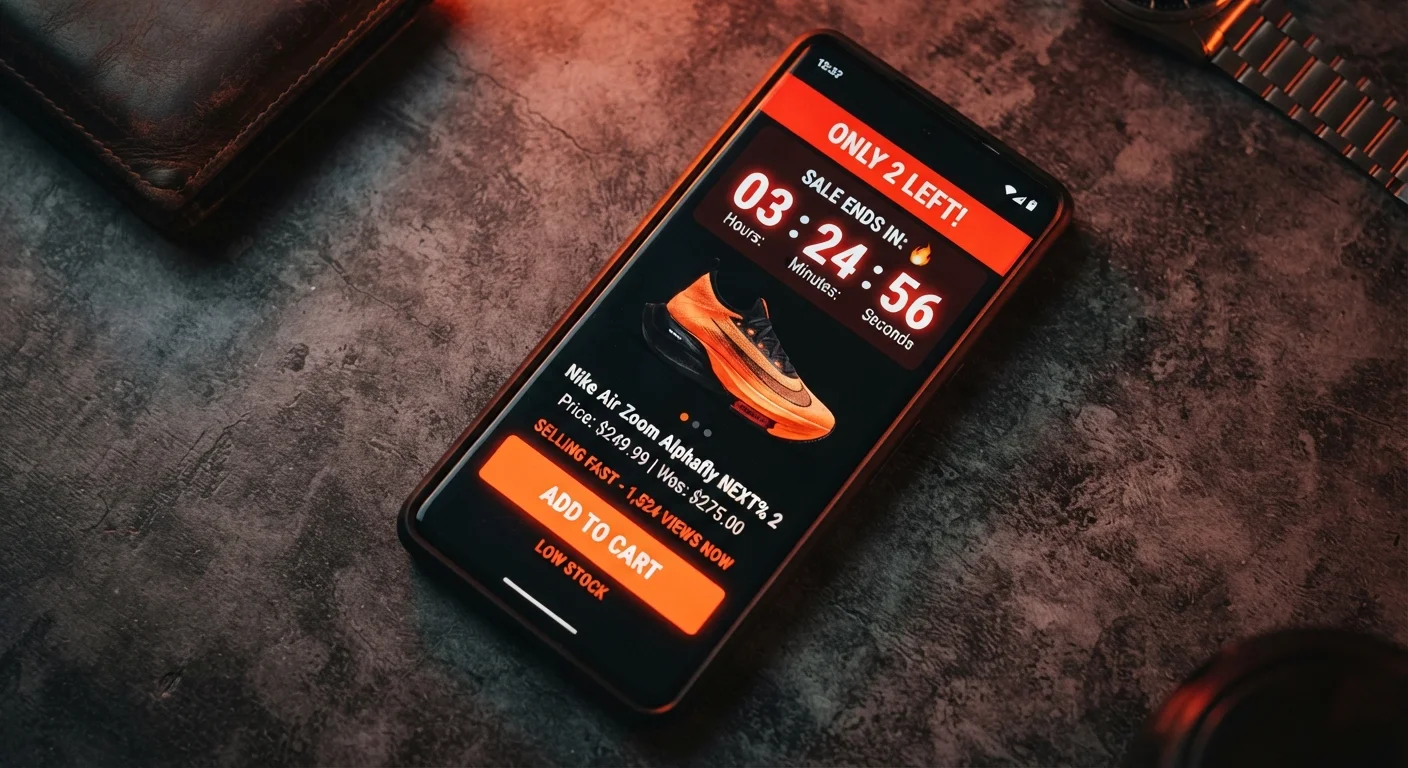
Why Flash Sales Are Built to Override Judgment
Flash sales and limited-time offers are not simply pricing events - they are engineered experiences. Every element, from the red countdown clock to the 'hurry, selling fast' badge, is chosen to compress the gap between seeing a price and completing a purchase. That compression is the point. When shoppers feel time pressure, they spend less effort comparing alternatives, verifying value, or asking whether they actually need the item.
This is not speculation. The field of behavioral economics has documented for decades that perceived scarcity and deadline pressure reliably reduce deliberative thinking. Retailers have access to this research, and many apply it systematically. That does not mean every flash sale is deceptive - genuine clearance events and inventory-driven discounts exist - but it does mean the format itself should not be taken at face value.
Urgency Is a Design Feature, Not a Service
Countdown timers, low-stock warnings, and 'sale ends tonight' banners are deliberate user-experience choices intended to accelerate purchasing decisions. Research in consumer psychology consistently shows these signals reduce comparative thinking and increase impulse conversions. Recognizing this framing before you act is the single most protective step you can take as a shopper.
The practical implication is straightforward: the more urgency a promotion creates, the more carefully it deserves scrutiny. Use the myths below as a checklist the next time a countdown timer is running on your screen.
Common Flash Sale Myths - and What's Actually True
Most shoppers carry at least a few assumptions about how sales work that don't hold up under examination. These misconceptions are not accidental; they are the logical conclusions of marketing language designed to be believed quickly rather than tested carefully.
Myth
If a countdown timer is running, the deal genuinely disappears when it hits zero.
Fact
Many countdown timers reset automatically or the same price persists under a different promotion label.
Countdown timers create the impression of a hard deadline, but retailers frequently cycle the same promotional pricing continuously. The timer may reset after midnight, or the sale may reappear within days under a different name. This tactic is documented in consumer research as 'perpetual urgency' - the deadline is cosmetic rather than structural. Before acting on a ticking clock, check whether the same price was available last week using a price-tracking browser extension or comparison site.
Myth
Flash sale prices are always lower than everyday prices for the same item.
Fact
Flash sale prices sometimes match - or even exceed - prices available on other platforms or at other times.
The word 'sale' signals savings, but the baseline it compares against matters enormously. If a retailer raised the list price before applying a discount, the 'sale' price may be identical to what the item cost two weeks earlier. Cross-referencing the sale price across multiple retailers and consulting price history data gives you a factual anchor. For more on how reference pricing shapes perception, see how retailers use cognitive bias in pricing.
Myth
'Only 3 left in stock' means you should buy immediately or lose the item forever.
Fact
Low-stock alerts are often triggered algorithmically and may not reflect true inventory scarcity.
Some e-commerce platforms display low-stock warnings based on warehouse thresholds that reset frequently, or they apply the label broadly to create pressure even when restocks are imminent. In categories like consumer electronics or apparel, popular items are typically replenished on a regular schedule. Scarcity messaging is most reliable for genuinely discontinued items or limited-edition releases - and even then, resale markets often fill the gap. Understanding how scarcity language works on buyers can help you pause before reacting.
Myth
Seasonal flash sales always offer the deepest discounts of the year.
Fact
Peak-season sales events are not universally the lowest prices; some categories discount more deeply during off-peak periods.
Major shopping events generate significant marketing investment, which can obscure the fact that some product categories - appliances, for example - often see steeper discounts during slower retail months when clearance pressure is higher. Retailers use high-traffic events to move inventory at margins that still serve them well, not necessarily to pass maximum savings to consumers. For a category-by-category breakdown, seasonal price patterns across retail categories provides useful context.
Myth
A large discount percentage is the clearest sign that a deal is genuinely good value.
Fact
Discount percentages only measure the gap between the current price and the reference price - which may be misleading.
A 60% discount off a price that was inflated by 70% is not a bargain. Percent-off figures are calculated against whatever the seller defines as the original price, which is only as trustworthy as the retailer's pricing integrity. The more meaningful question is: what is the lowest price this item has reliably sold for, and how does today's price compare? That calculation requires price history data, not just the number on the sale badge. New to evaluating promotions critically? a consumer-focused introduction to deals and pricing covers the core concepts.
If you want a structured way to apply this thinking before any purchase, a practical pre-purchase checklist walks through each verification step. And if you're managing a budget where impulse purchases carry real consequences, the principles in budgeting basics offer a useful framework for setting purchase guardrails before you encounter a sale.
Inflated 'Original' Prices Are Common
Some retailers set artificially high reference prices - sometimes called 'anchor prices' - that a product was rarely or never actually sold at. Regulations in the US vary by state, and enforcement is inconsistent. Always verify the claimed original price against independent price-tracking tools or retailer history before treating a discount percentage as meaningful.
How to Evaluate Any Time-Sensitive Offer
Separating genuine value from manufactured urgency comes down to three checks you can run in under two minutes:
- Verify the price history. Free browser extensions and dedicated comparison sites track price changes over time on major retail platforms. If the 'sale' price has been the standard price for months, the discount is nominal.
- Check the same item elsewhere. A competitive market means the same product is often available from multiple sources. A price that looks like a deal on one platform may be standard on another.
- Ask whether you planned this purchase. If the answer is no, the urgency signal - not the value - is probably driving the decision. Unplanned purchases triggered by promotions account for a disproportionate share of returns and expressed buyer's remorse.
Flash sales can occasionally deliver real savings, particularly on seasonal goods moving through clearance cycles. The differentiator is always whether the price reflects genuine value relative to verified market pricing, not whether the timer creates pressure to decide now.
~40%
Shoppers who regret impulse purchases
Consumer surveys by the National Retail Federation have consistently found that roughly 4 in 10 shoppers report regretting at least one impulse purchase driven by a sale or promotion.
Up to 30%
E-commerce items with inflated reference prices
Research cited by consumer advocacy groups suggests a significant share of 'discounted' online listings use reference prices that do not reflect prevailing market rates.
The content on this site is for informational purposes only and is not a substitute for professional advice. Always consult a qualified professional for guidance specific to your situation.