

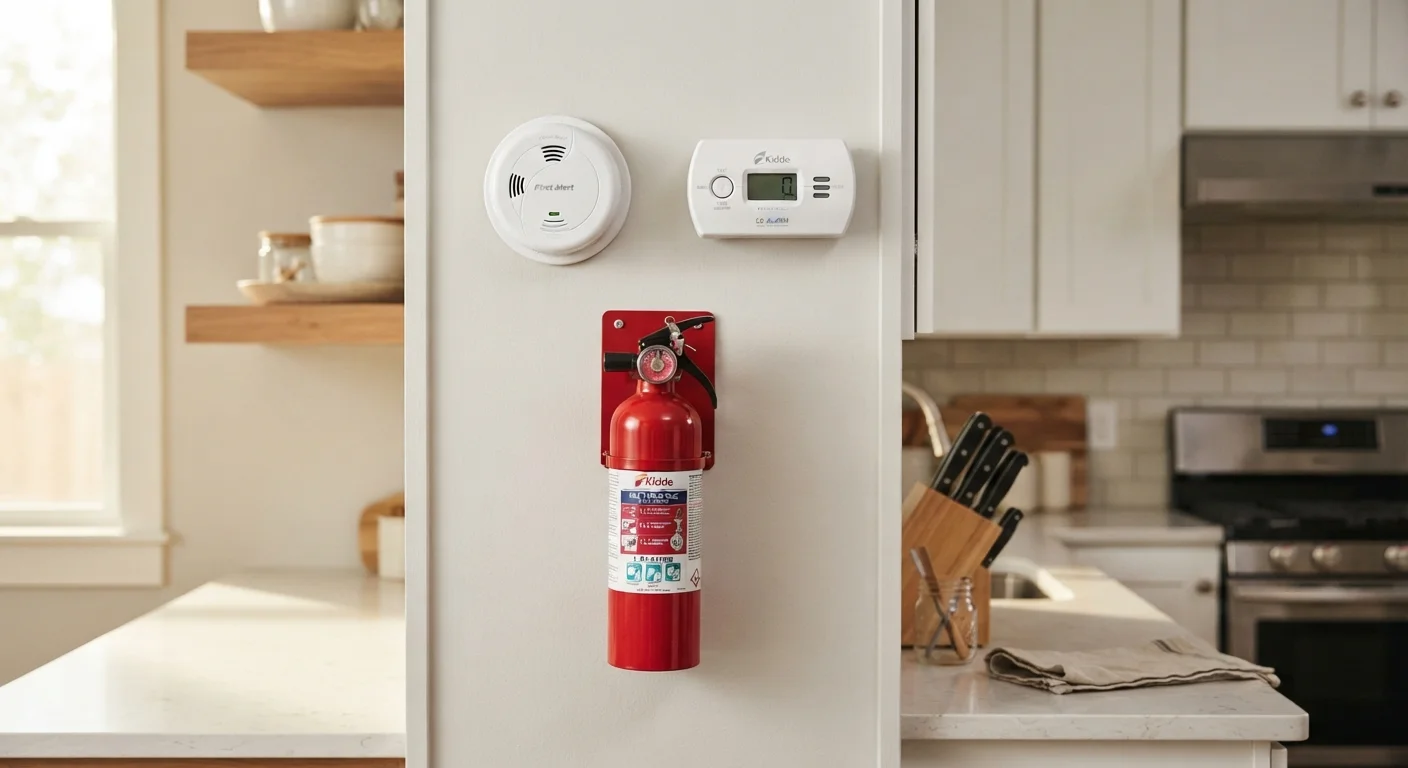
Smoke Detectors: Placement, Testing, and Replacement
Smoke detectors are your first line of warning in a house fire, but only when they're functional and correctly positioned. The U.S. Fire Administration recommends installing a smoke alarm inside every bedroom, outside each sleeping area, and on every level of the home, including the basement.
Testing and Battery Intervals
Test each alarm once a month by pressing and holding the test button until the alarm sounds. Replace batteries at least once a year - or immediately when the low-battery chirp begins. Hardwired alarms with battery backup follow the same battery schedule.
When to Replace the Unit
Smoke detectors have a manufacturer-rated service life, typically 10 years from the manufacture date (printed on the back of the unit). After that point, the sensing chamber degrades and reliability drops, even if the test button still works. Check the date on each unit and replace any that are past their expiration. This task pairs well with the broader checklist in our seasonal home maintenance reference.
Placement Tips
- Mount on the ceiling or high on a wall (4-12 inches from the ceiling for wall units).
- Keep detectors at least 10 feet from cooking appliances to reduce nuisance alarms.
- Avoid placing units near windows, doors, or ducts where drafts can interfere with detection.
Carbon Monoxide Alarms: Rules and Risks
Carbon monoxide (CO) is odorless and colorless, making a functioning CO alarm the only reliable way to detect a dangerous buildup. CO is produced by fuel-burning appliances - furnaces, gas stoves, fireplaces, attached garages, and generators.
Carbon monoxide (CO)
A colorless, odorless gas produced by incomplete combustion of fuels such as natural gas, propane, oil, wood, and gasoline. At elevated concentrations indoors it can be life-threatening.
Electrochemical CO sensor
The most common sensing technology in residential CO alarms. It uses a chemical reaction to detect CO molecules; the sensor's accuracy degrades over time, which is why alarms have an expiration date.
ABC-rated extinguisher
A multipurpose dry-chemical fire extinguisher rated for Class A (ordinary combustibles), Class B (flammable liquids), and Class C (electrical) fires. Suitable for most residential settings.
Ionization vs. photoelectric detector
Two detection technologies used in smoke alarms. Ionization alarms respond faster to fast-flaming fires; photoelectric alarms respond faster to slow, smoldering fires. Combination or dual-sensor alarms address both fire types.
Where CO Alarms Belong
Install a CO alarm on each level of the home and outside every separate sleeping area. Combination smoke/CO alarms are acceptable in most jurisdictions, but confirm your local code requirements. Many states now mandate CO alarms in all residences with attached garages or fuel-burning appliances - check with your local building or fire department for the rule in your area.
Testing and Replacement
Test CO alarms monthly using the test button. Replace batteries annually (or per chirp alert). CO alarm sensors wear out more quickly than smoke detectors - most units carry a 5- to 7-year service life. The expiration date is typically found on the back or bottom of the unit. Do not assume an older alarm is still sensing accurately just because it powers on.
If a CO alarm activates with a continuous alert, move everyone outside immediately and call 911 - do not re-enter until emergency responders have cleared the space.
Fire Extinguishers: Type, Inspection, and Readiness
A portable fire extinguisher can contain a small, contained fire before it spreads - but only if it's the right type, in good condition, and used correctly. Most households should keep at minimum a multipurpose dry-chemical extinguisher rated ABC, which covers ordinary combustibles, flammable liquids, and electrical fires.
3 of 5
Home fire deaths in homes with no working smoke alarms
According to the National Fire Protection Association (NFPA), roughly three of every five home fire deaths occur in homes with no smoke alarms or non-working alarms.
5-7 years
Typical CO alarm sensor lifespan
Most CO alarm manufacturers rate their sensors for 5 to 7 years; the expiration date is printed on the unit.
Where to Keep One
- Kitchen: Mount near the exit, not directly beside the stove (heat and grease exposure degrade units faster, and you need an escape path).
- Garage and workshop: Fuel and electrical hazards make these high-priority locations.
- Each additional floor in multi-story homes.
Monthly and Annual Checks
Each month, verify the pressure gauge needle sits in the green zone and the pull pin and tamper seal are intact. Annually, inspect for dents, corrosion, and legible instructions. Professional servicing or hydrostatic testing may be required at intervals specified by the manufacturer or your local fire code - check the label for guidance.
When to Replace
Disposable extinguishers are not rechargeable - replace after any use, even partial discharge. Most manufacturers recommend replacement every 10-12 years, or sooner if the gauge reads low, the unit shows physical damage, or the label is unreadable. Rechargeable models can be professionally serviced and refilled rather than replaced outright.
For a broader look at connected safety options, see our room-by-room guide to smart home security devices, and don't overlook the maintenance tasks new homeowners most commonly overlook.
This article is for general informational and educational purposes only. Always verify current requirements with your local fire marshal, building department, or a licensed professional, as codes and recommendations vary by jurisdiction.
The content on this site is for informational purposes only and is not a substitute for professional advice. Always consult a qualified professional for guidance specific to your situation.