
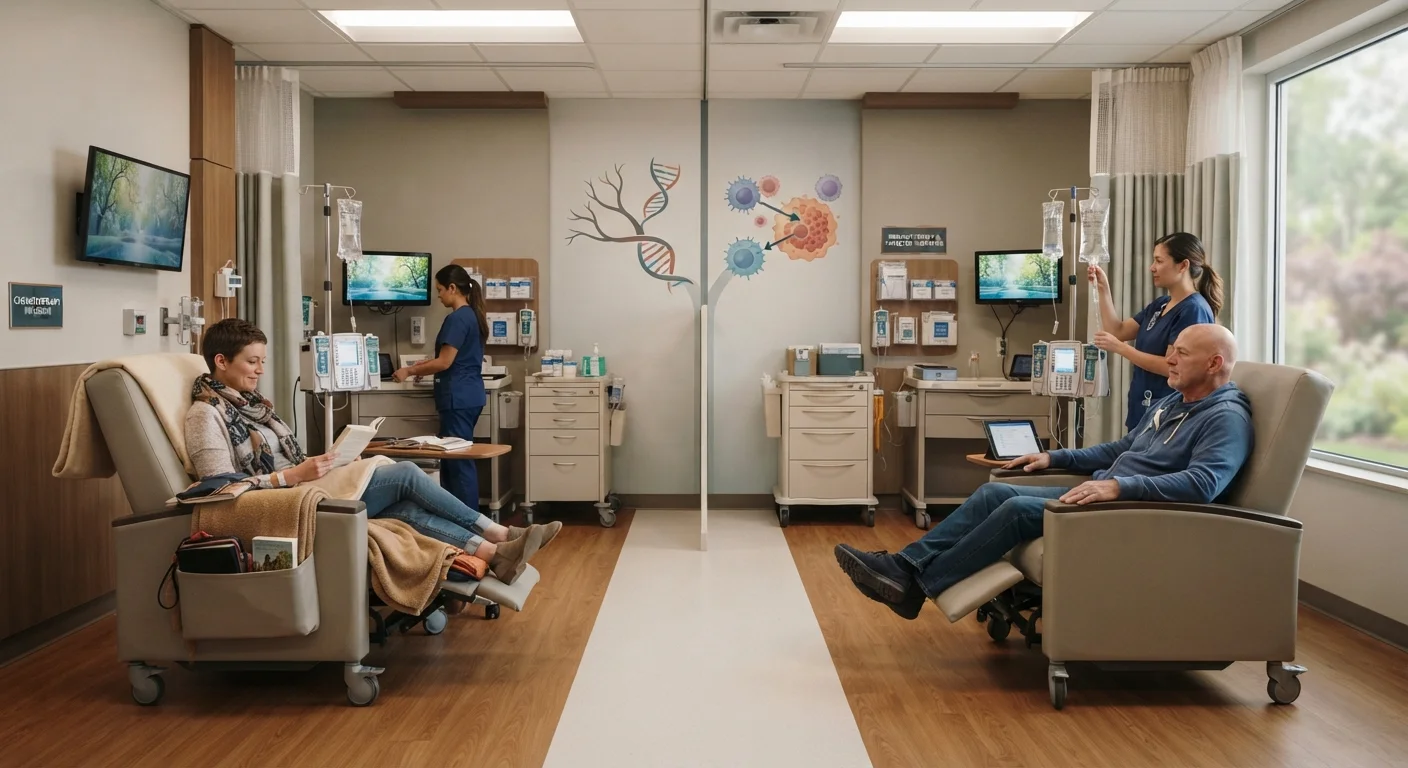
Option A
Chemotherapy
The systemic, whole-body treatment approach.
Best for: Cancers that have spread or are at risk of spreading beyond a single site, including blood cancers and metastatic disease.
Option B
Radiation Therapy
The targeted, localized treatment approach.
Best for: Solid tumors confined to a specific area of the body where high-precision energy can be directed without systemic effects.
How Each Treatment Works
Chemotherapy and radiation therapy are both designed to damage or destroy cancer cells, but they accomplish this through fundamentally different mechanisms - and understanding that distinction helps patients and families make sense of the treatment plans their oncologists recommend.
Chemotherapy uses powerful drugs - administered orally, intravenously, or through other routes - that travel through the bloodstream. Because the drugs circulate system-wide, they can reach cancer cells that may have migrated from the original tumor site. This systemic reach is chemotherapy's defining strength, but it also means healthy, rapidly dividing cells (such as those in hair follicles, the digestive lining, and bone marrow) can be affected, which drives many of chemotherapy's well-known side effects.
Radiation therapy works locally. High-energy beams - typically X-rays or proton beams - are directed at a tumor from outside the body (external beam radiation) or, in some cases, placed inside the body near the tumor (brachytherapy). The radiation damages the DNA of cancer cells in the targeted zone, impairing their ability to reproduce. Modern imaging and computer planning allow radiation oncologists to map the tumor with great precision, minimizing exposure to surrounding tissue.
| Criterion | Chemotherapy | Radiation Therapy |
|---|---|---|
| Mechanism | Drug-based, travels via bloodstream | Energy-based, targets a specific site |
| Reach | Systemic (whole body) | Local (targeted area) |
| Administration | IV infusion, oral, or injected | External beam or internal implant |
| Common side effects | Nausea, hair loss, fatigue, low immunity | Skin irritation, localized fatigue, tissue inflammation |
| Best suited for | Spread or systemic cancers | Localized solid tumors |
| Can be combined? | Yes, often used with radiation | Yes, often used with chemotherapy |
Side Effects: What Patients Can Expect
Because the two therapies act on the body differently, their side effect profiles are distinct - though both can be significant and should be discussed thoroughly with a care team before treatment begins.
Common side effects of chemotherapy include fatigue, nausea, hair loss, increased infection risk (due to lowered white blood cell counts), and mouth sores. These effects tend to be body-wide because the drugs do not discriminate between cancer cells and other fast-growing cells. The specific drugs used, the dosage, and the treatment schedule all influence which side effects occur and how severely.
Common side effects of radiation therapy are more localized. Skin irritation at the treatment site, fatigue, and inflammation of nearby tissues are frequently reported. The nature of the side effects depends heavily on the body region being treated - for example, radiation to the chest may cause esophageal irritation, while pelvic radiation may affect bladder and bowel function.
Side Effects Vary Widely by Individual
Not every patient experiences every side effect, and severity can differ substantially depending on the drugs used, radiation dose, treatment site, and individual health factors. Some patients tolerate treatment with relatively mild effects, while others require significant supportive care. Your oncology team can outline what is most likely for your specific regimen and help you prepare.
Oncologists work to manage side effects throughout treatment. Patients are encouraged to report symptoms early, as many can be addressed with supportive care. See our questions to ask your oncologist for guidance on how to communicate effectively with your care team.
When Treatments Are Used Together - and How Staging Plays a Role
Chemotherapy and radiation are not mutually exclusive. Oncologists frequently combine them - a strategy known as chemoradiation or concurrent therapy - because the two approaches can complement each other. Some chemotherapy drugs also act as radiosensitizers, making cancer cells more vulnerable to the effects of radiation when given simultaneously.
The decision about which treatment to use - alone or in combination - is deeply tied to cancer staging. A Stage I localized tumor may be treated with radiation alone, while a Stage III or IV cancer may require chemotherapy as the primary systemic agent, with radiation used to control the local tumor. Our article on cancer staging explained offers helpful context for understanding how oncologists classify disease and why that classification shapes treatment strategy.
~50%
Cancer patients receiving radiation at some point
The American Society for Radiation Oncology estimates that roughly half of all cancer patients will receive radiation therapy as part of their care.
100+
Chemotherapy drugs currently in clinical use
The National Cancer Institute recognizes over 100 distinct chemotherapy agents approved for various cancer types, reflecting the breadth of the treatment category.
Treatment planning also accounts for a patient's overall health, organ function, and personal circumstances. Cancer care is inherently individualized - no two plans are identical, even for patients with the same cancer type and stage. For those navigating the financial implications of either treatment path, navigating cancer costs outlines assistance programs and planning considerations worth exploring with a financial counselor.
This article is for general informational and educational purposes only and does not constitute medical advice. Always consult a qualified oncologist or healthcare professional regarding any cancer diagnosis, treatment options, or health decisions specific to your situation.
The content on this site is for informational purposes only and is not a substitute for professional advice. Always consult a qualified professional for guidance specific to your situation.