

Our Verdict
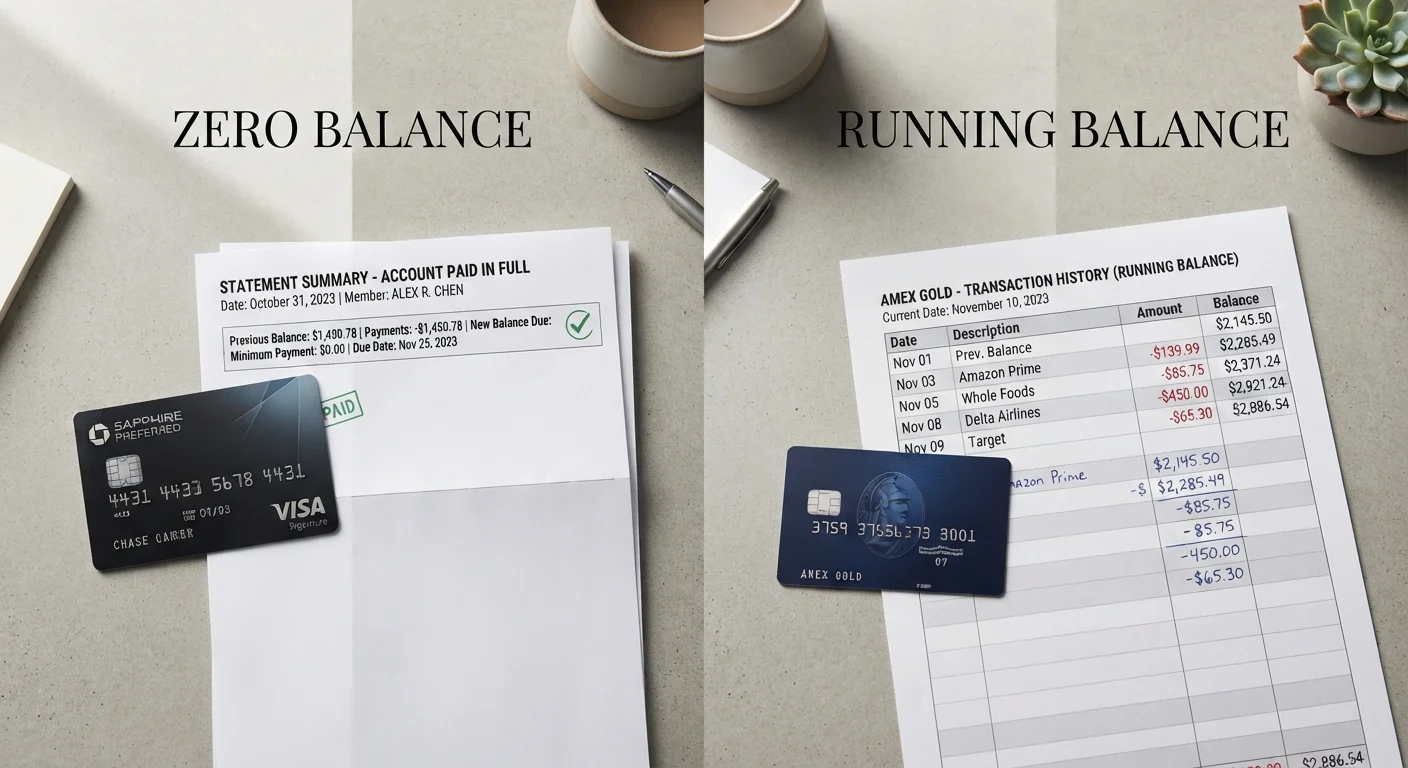
For most consumers, paying the full statement balance each month is the financially sound default - it eliminates interest costs and keeps credit utilization in check. Carrying a balance is rarely advantageous except when a verified 0% promotional APR is in play, and even then, a clear payoff plan is essential. Neither choice is inherently shameful, but the costs are real and worth understanding clearly.
Consumers who want to eliminate unnecessary interest costs and build a stable credit profile over time will benefit most from the pay-in-full habit.
How Credit Card Interest Actually Works
When you don't pay your full statement balance by the due date, most credit card issuers begin charging interest on the remaining amount - and often on new purchases too. This rate, called the Annual Percentage Rate (APR), is divided into a daily rate and applied to your average daily balance throughout the billing cycle.
Because interest compounds daily on most US credit cards, even a modest balance can grow faster than many people expect. For example, a $1,000 balance on a card with a 24% APR accumulates roughly $20 in interest in the first month - but that interest itself becomes part of the balance on which future interest is calculated.
It's also worth noting that the grace period - the interest-free window between your statement closing date and your payment due date - disappears once you carry a balance forward. That means new purchases may start accruing interest immediately, not after your next statement. Understanding this mechanism is foundational to any honest cost comparison.
The Minimum Payment Trap
Card issuers are required to disclose on your statement how long it will take to pay off your balance if you only make minimum payments. These disclosures are often striking - a $3,000 balance at 24% APR paid off at the minimum rate can take over a decade and cost more than the original balance in interest alone. The minimum payment keeps your account in good standing but is rarely an efficient repayment strategy.
The Real Cost of Carrying a Balance
Carrying a balance isn't just a minor inconvenience - it's a measurable transfer of money from your pocket to the card issuer. The Federal Reserve's consumer credit data consistently shows average credit card APRs well above 20%, making revolving debt one of the most expensive common forms of borrowing available to US consumers.
Interest compounds daily, growing the balance quickly
Most US credit cards apply a daily periodic rate to your average daily balance, meaning unpaid amounts grow continuously - not just once at month's end.
Grace period disappears when a balance is carried
Once you carry any balance forward, new purchases can begin accruing interest immediately, removing a key protection that full-payment users enjoy.
High utilization can weigh on your credit score
Credit scoring models typically treat utilization above 30% of available credit as a risk signal, and a persistent carried balance makes elevated utilization more likely.
Minimum payments extend debt repayment dramatically
Paying only the minimum each month on a significant balance can result in years of repayment and a final cost far exceeding the original charges.
Beyond interest, a sustained balance can affect your credit utilization ratio - the share of available credit you're using - which is a significant factor in most credit scoring models. Persistently high utilization can weigh on your credit score, which in turn affects borrowing costs elsewhere, from auto loans to mortgages. For a deeper look at how utilization and other factors interact with your score, see common credit score myths that may be shaping your decisions.
Paying in Full: Advantages and Limits
Paying your statement balance in full by the due date is the simplest way to use a credit card without paying for the privilege. You preserve your grace period, avoid interest, and keep your utilization lower - assuming you're not charging more than a reasonable fraction of your credit limit.
Eliminates interest charges entirely each cycle
Paying the full statement balance by the due date means the card issuer collects no interest, making the card a free short-term payment tool rather than a borrowing cost.
Preserves the card's grace period on new purchases
As long as no balance is carried forward, new purchases typically don't accrue interest until after the next due date, extending your interest-free window automatically.
Keeps credit utilization lower
Clearing the balance each month means your reported utilization reflects only what you charged during the cycle, which can support a healthier credit score over time.
Reinforces consistent spending discipline
Committing to paying in full each month encourages cardholders to charge only what they can afford, reducing the risk of accumulating debt over time.
That said, paying in full isn't automatically available to everyone at every moment. An unexpected expense, a reduced income month, or a spending miscalculation can make the full balance unreachable. In those cases, paying as much as possible - certainly more than the minimum - limits the interest damage while you work toward full repayment. See how your paycheck maps to expenses for a clearer picture of where buffer room might exist in your monthly cash flow.
When Carrying a Balance Might Be Intentional
There are limited situations where carrying a balance is a deliberate, calculated choice rather than a consequence of overspending. The most common is a 0% introductory APR promotion, where a card issuer charges no interest for a defined period - often 12 to 21 months - on purchases or balance transfers.
20%+
Average US credit card APR
Federal Reserve consumer credit data has shown average credit card interest rates consistently exceeding 20% in recent years, underscoring the cost of revolving debt.
12-21 months
Typical 0% intro APR promotional window
Many balance-transfer and purchase cards offer promotional 0% APR periods in this range, after which the standard variable rate applies.
If you're using a 0% period to finance a large necessary purchase or consolidate existing debt, carrying a balance during that window can be cost-free - provided you pay it off before the promotional rate expires. Once the promotional period ends, the standard APR applies, often retroactively in some product structures. Always read the terms carefully. If carrying a larger balance has become a recurring pattern rather than a planned strategy, debt consolidation may be worth evaluating as a structured path forward.
This article is for general informational purposes only and does not constitute personalised financial or credit advice. Consult a licensed financial adviser for guidance tailored to your individual circumstances.
The content on this site is for informational purposes only and is not a substitute for professional advice. Always consult a qualified professional for guidance specific to your situation.