

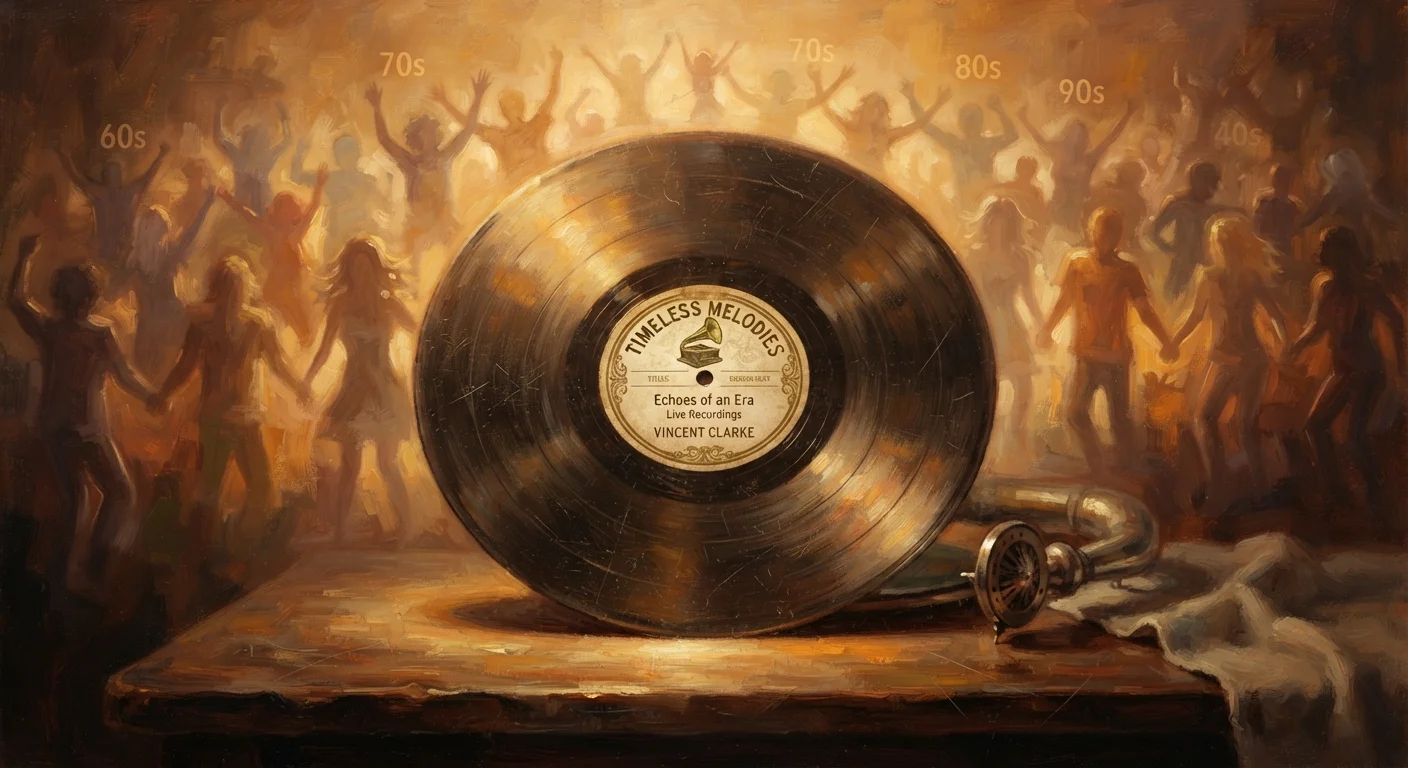
The Brain's Built-In Time Machine
There's a reason hearing a song from your high school years can stop you mid-step. The human brain encodes music alongside the emotions and experiences happening at the time - a process that researchers believe is linked to the limbic system, the region associated with memory and emotional response. This means music doesn't just trigger memories; it is memory, encoded in a uniquely powerful way.
Psychologists have long studied what's known as the reminiscence bump - the tendency for adults to recall personal memories from roughly ages 12 to 25 most vividly. The music absorbed during those years gets hardwired into identity, which is why a song from your formative years can feel perpetually current no matter how many decades pass.
“Nostalgia is not merely a longing for the past - it is a resource people use to feel connected, to find meaning, and to face the future with greater confidence.”
— Constantine Sedikides, Professor of Social and Personality Psychology, University of Southampton
How Culture Creates Nostalgia Cycles
Nostalgia isn't just personal - it's also collective. Cultural revivals tend to arrive roughly 20 to 30 years after an era fades, as the generation that lived it enters midlife and begins championing its significance. The 1980s resurgence of the 2010s and the ongoing 1990s revival are textbook examples: the people who grew up with those sounds reached cultural influence and pulled them back into the spotlight.
What makes today's environment different is the role of streaming. Platforms now make every decade's catalog instantly available, compressing nostalgia cycles and letting multiple eras coexist on a single playlist. A teenager discovering Fleetwood Mac alongside a reissued 90s R&B classic alongside a throwback hip-hop track isn't unusual - it's Tuesday. This has also accelerated secondhand nostalgia, where younger listeners develop genuine affection for eras they never personally experienced.
~70%
Adults who associate specific songs with vivid memories
Research in music psychology consistently finds the majority of adults report strong autobiographical memory associations triggered by music from their youth.
20-30 yrs
Typical gap before a cultural nostalgia wave peaks
Cultural analysts observe that nostalgia revivals tend to crest when the generation that experienced an era reaches midlife and cultural influence.
12-25
Age range of the reminiscence bump
Memory researchers identify this life stage as the period when music and experience are encoded most vividly, forming lifelong emotional anchors.
Artists Who Play the Nostalgia Card - and Why It Works
Savvy musicians have always understood that triggering familiar feelings is one of the most reliable tools in pop culture. Artists frequently mine aesthetics, production styles, and sonic signatures from earlier decades to evoke an emotional shorthand audiences already trust. This isn't imitation so much as conversation - a way of saying you know this feeling, and here it is again.
Sampling is one of the most direct expressions of this. When a current artist lifts a distinctive bass line or vocal hook from a decades-old track, they instantly import all the emotional weight that song already carries. That emotional bridge has launched chart careers and reignited interest in original artists who had largely stepped out of the spotlight. For more on how artists reshape their identity around such strategies, see how musicians reinvent themselves between albums.
Genre itself has become a nostalgia vehicle. The blurring of sonic boundaries explored in the map of modern music's hybrid sounds shows how past genre DNA keeps resurfacing in new combinations, giving audiences something familiar anchored in something fresh.
Spotting Nostalgia in New Releases
Listen for production choices like analog warmth, reverb-heavy drums, or vintage synth patches in new music - these are deliberate signals to past eras. When an artist's music video aesthetic, fashion, or album artwork mirrors a specific decade, that's part of the same calculated conversation with listeners' memories.
Why Nostalgia Endures as a Cultural Force
Nostalgia's staying power goes beyond simple comfort. Research in psychology suggests it can reinforce a sense of social continuity - connecting listeners not just to their own past but to something shared and communal. At moments of cultural uncertainty, familiar music offers a kind of emotional stability. It's no coincidence that revival tours consistently sell out, or that catalog albums frequently reenter streaming charts without a new release attached.
The phenomenon also intersects with how audiences process celebrity culture broadly. The same emotional mechanics that make a song feel timeless can make an artist feel irreplaceable - which factors into the dynamics that shape a celebrity comeback's success. When nostalgia is on your side, the audience is already rooting for you.
Ultimately, musical nostalgia isn't regression - it's a living, adaptive force that keeps past eras in active cultural dialogue with the present. The songs people return to aren't relics; they're ongoing reference points for who listeners are and where they've come from.
Frequently Asked Questions
Music heard during emotionally significant life periods - first loves, school years, formative friendships - becomes deeply tied to those memories. When you hear those songs again, your brain reactivates associated emotions, making the experience feel both personal and powerful.
The reminiscence bump refers to the tendency for people to have stronger, more vivid memories of events from ages 12 to 25. Music heard during those years tends to feel especially meaningful throughout adulthood, which is why music from your teens often feels like 'your era.'
Cultural nostalgia tends to peak roughly 20 to 30 years after an era ends, as the generation that lived it reaches midlife. New audiences simultaneously discover that era's music through streaming and sampling, creating overlapping waves of revival interest.
Yes - this is sometimes called 'secondhand nostalgia.' Younger listeners often develop deep affection for past eras they experienced through family, film soundtracks, or social media, even if they weren't alive when the music was originally popular.
When a contemporary artist samples a recognizable older track, they bridge two audiences at once - longtime fans of the original and new listeners discovering it for the first time. It extends a song's cultural life and keeps past eras audible in the present.
The content on this site is for informational purposes only and is not a substitute for professional advice. Always consult a qualified professional for guidance specific to your situation.